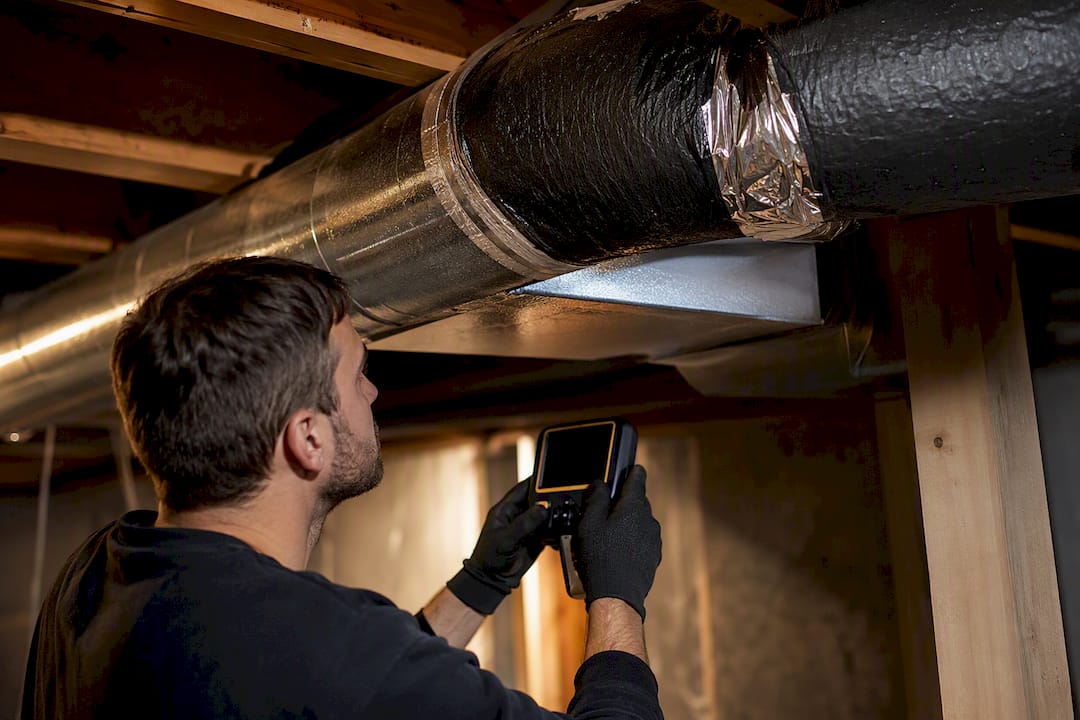
Most homeowners with functional existing ductwork should choose a ducted heat pump; homes without ducts, additions, or rooms with uneven temperatures do better with a ductless mini split. The right call hinges on three things: your existing duct condition, home layout, and how much zoned control you want. Natural Resources Canada treats both as legitimate paths to year-round comfort, and a proper Manual J heat-loss calculation matters more to your outcome than the ducted-versus-ductless label itself.
Before signing a contract, take these energy efficiency tips for homeowners steps:
- Get a room-by-room Manual J or CSA F280 heat-loss calculation, not a rule-of-thumb estimate.
- Check CleanBC and federal Greener Homes rebate eligibility before finalizing your system choice.
- Book a site assessment with a licensed contractor to inspect existing ducts and electrical capacity.
Key Takeaways
The right heat pump choice depends less on ducted versus ductless as a category and more on your existing duct condition, home layout, and a professionally sized installation.
| Point | Details |
|---|---|
| Ducts decide the default | Sound existing ductwork favours ducted; no ducts or problem rooms favour ductless. |
| Sizing beats system type | A Manual J or CSA F280 heat-loss calculation prevents short cycling and uneven comfort. |
| Duct losses are conditional | Losses of 10% to 30% only apply to leaky or poorly sealed ducts, not sealed systems. |
| Permits protect your rebate | CleanBC and Greener Homes rebates require licensed installation and proper permit documentation. |
| Multigroup manages the full process | Multigroup handles site assessment, heat-loss calculations, permits, and commissioning across Metro Vancouver. |
Where to check permit rules and technical standards
Save these before you finalize a contractor: Natural Resources Canada for heat pump technical basics, your municipality’s mechanical permit page for local requirements, and Technical Safety BC for electrical safety thresholds on larger equipment. Print the permit checklist for your installer’s first visit.
Table of Contents
- What is the difference between ducted and ductless heat pumps?
- Ducted vs ductless heat pump: pros, cons, and cost comparison
- What does a ducted or ductless heat pump cost to install?
- How do you decide which heat pump system fits your home?
- Why does sizing matter more than the ducted vs ductless label?
- What maintenance do ducted and ductless heat pumps need?
- What permits and rebates apply to a heat pump installation?
- How Multigroup manages your heat pump retrofit from permit to commissioning
- Sources
- FAQ
What is the difference between ducted and ductless heat pumps?
A ducted heat pump places its indoor coil inside a network of ducts that push conditioned air through your home from a central air handler, controlled by one thermostat or a handful of zoned dampers. A ductless system, often called a mini split, mounts one or more indoor heads directly on walls or ceilings in individual rooms, each wired by refrigerant line to a single outdoor condenser. Both configurations rely on the same outdoor unit technology and both can heat and cool the same home year-round, according to the City of Vancouver’s heat pump guidance; the difference is entirely in how the conditioned air actually reaches your living space.
Picture the physical layout: a ducted system hides its coil in the attic or a mechanical closet, with sheet metal or flex duct snaking to supply registers in each room. A ductless system skips that entirely. Refrigerant lines, roughly the width of a garden hose, run through a small wall penetration to each indoor head, and every head can be set to a different temperature.
- Ducted: one outdoor condenser, one indoor air handler, ductwork throughout the home, single or zoned thermostat control.
- Ductless: one outdoor condenser, one to eight indoor heads, no ducts, independent zone control per head.
Fast fact: Ductless indoor units typically run at just 19 to 30 decibels, quieter than a whispered conversation, while ducted systems avoid the visible wall units but lose 10% to 30% of conditioned air to duct leakage in older, poorly sealed systems.
Ducted vs ductless heat pump: pros, cons, and cost comparison
The two systems trade off differently across the factors that actually shape day-to-day comfort and long-term cost. Duct losses of 10% to 30%, documented by Natural Resources Canada, only matter in homes with aging or poorly sealed ductwork; sealed and properly insulated ducts close most of that gap.
| Factor | Ducted | Ductless |
|---|---|---|
| Best for | Larger homes, whole-home coverage, existing sound ducts | Additions, homes without ducts, single problem rooms |
| Installation complexity | Higher if ducts need resizing or replacing | Lower; wall penetration and line set per head |
| Operating cost/efficiency | Reduced by duct losses unless ducts are sealed | Higher zoned efficiency; no duct losses |
| Comfort/uniformity | Even airflow with properly sized ducts | Excellent per-room, variable between rooms without enough heads |
| Zoning & control | Limited unless zoned dampers installed | Independent control per head, built-in |
| Aesthetics/visibility | Hidden, no visible indoor equipment | Visible wall or ceiling-mounted heads |
| Maintenance & lifespan | Duct inspection plus filter and coil service | Filter cleaning per head, generally simpler |
Ducted system pros and cons:
- Invisible equipment; no wall-mounted units to work around furniture placement.
- Uses existing distribution if ducts are already sound.
- Duct leaks or undersized ductwork can undercut efficiency and comfort significantly.
Ductless system pros and cons:
- Room-by-room control means you’re not heating an empty guest room.
- No ductwork required, making it the practical choice for additions and older homes.
- Multiple indoor heads change a room’s look, and some homeowners resist that visually.
What does a ducted or ductless heat pump cost to install?
Installation cost depends on the number of indoor heads or the linear feet of new ductwork, plus any electrical panel upgrade, permitting, and how accessible your attic or crawlspace is. A single-zone ductless system, covering one room or a small addition, typically lands at the low end of the cost spectrum. Multi-zone ductless setups, covering three or four rooms with independent heads, cost proportionally more per zone added. A full ducted retrofit costs more when ductwork needs resizing or replacement, but often costs less than ductless when existing ducts are already sound, since you’re reusing distribution infrastructure rather than adding several indoor units, a trade-off installer guides consistently report.
Cost drivers to ask your contractor about:
- Number of indoor heads (ductless) or linear feet of new duct (ducted retrofit or new build)
- Electrical panel capacity and whether a service upgrade is needed
- Municipal permit fees and inspection scheduling
- Site access, including attic height, crawlspace clearance, and wall thickness for line sets
Pro Tip: Don’t compare systems on installation price alone. A cheaper ducted retrofit with leaky, undersized ducts can cost more over 15 years in wasted energy than a slightly pricier ductless setup with zoned efficiency built in.
How do you decide which heat pump system fits your home?
Work through this in order, because each step narrows the decision before you request quotes.
- Assess your existing ductwork. Have a contractor check duct size, insulation, and leakage. Ducts sized for a high-velocity furnace are often undersized for a heat pump’s airflow needs, and forcing a heat pump through them causes noise and static pressure problems, a common retrofit pitfall Natural Resources Canada flags directly.
- Match system type to home size and layout. Open-concept homes with sound ducts favour ducted; additions, secondary suites, and homes with no ducts favour ductless.
- Rank your comfort priorities against budget. Decide how much per-room zoning matters to you and whether visible indoor heads are a dealbreaker.
Before you sign anything, ask every installer quoting your project:
- Will you perform a Manual J heat-loss calculation for every room, not just the whole house?
- Will you run a duct leakage test if ducts already exist?
- What does your commissioning process include, and will I get documentation?
- What’s covered under warranty, and who handles permit submission?
Why does sizing matter more than the ducted vs ductless label?
An oversized heat pump, ducted or ductless, short cycles: it kicks on, satisfies the thermostat too fast, and shuts off before running efficiently, which wears the compressor prematurely and leaves rooms unevenly heated. That’s why a professional Manual J or CSA F280 heat-loss calculation matters more to your comfort outcome than which distribution method you pick.
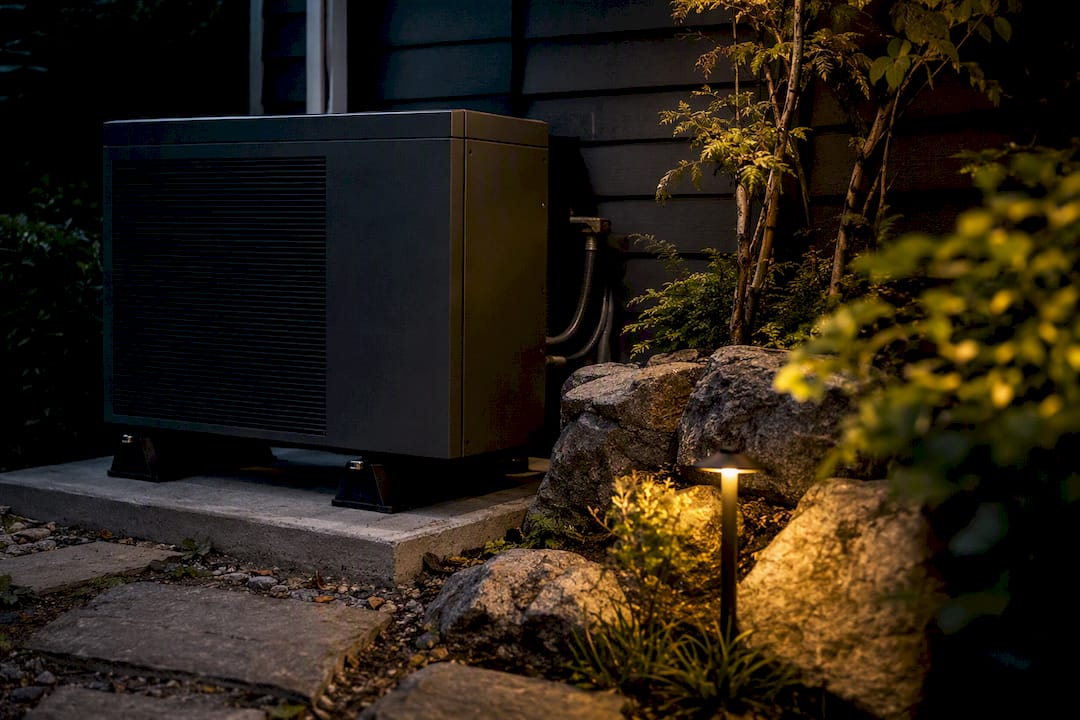
Cold-climate performance is the other variable worth checking. Ask for the equipment’s coefficient of performance (COP) at low outdoor temperatures and its low-ambient rating, since capacity drops in deep cold and some homes need supplemental heat as backup. A solid installer quote includes room-by-room heat-loss numbers, efficiency ratings comparable across brands, and a written commissioning plan.
Pro Tip: Insist on inverter-driven, variable-speed equipment. It modulates output instead of cycling fully on and off, which keeps temperatures steadier and reduces compressor wear over the system’s life.
What maintenance do ducted and ductless heat pumps need?
Ducted systems need periodic duct inspection for leaks, filter replacement every one to three months, and annual coil checks. Ductless heads need simpler upkeep: wipe or wash the filter every few weeks and schedule professional service on the indoor coil once a year. Most failure modes in both trace back to skipped commissioning rather than the equipment itself.
- Ducted: inspect duct seals, replace filters regularly, check the indoor coil annually.
- Ductless: clean filters on each head, service the outdoor unit yearly, check refrigerant lines for wear.
- Both types commonly reach 15 to 20 years of service life with proper maintenance and documented commissioning.
What permits and rebates apply to a heat pump installation?
Most Metro Vancouver municipalities require a mechanical permit for a heat pump installation, and Vancouver’s permitting guidance confirms this applies to the large majority of residential projects. If you’re decommissioning an existing furnace, a separate gas permit may also apply, and Technical Safety BC notes equipment rated 5 kW or higher can fall under additional electrical safety requirements.

Rebate reality check: CleanBC and federal Greener Homes incentives require the work to be done by a licensed installer with proper documentation. Skip the permit, and you risk rebate denial even if the install itself is sound.
Practical steps before you commit:
- Confirm permit requirements with your municipality before scheduling work.
- Have your contractor prepare sealed design documents and CSA F280 heat-loss paperwork.
- Keep your compliance letter on file; rebate programs typically request it. Our energy efficiency guide breaks down how licensed installation ties directly to rebate eligibility.
A contractor’s take on common mistakes
The homeowners who regret their choice almost always prioritized the lowest quote over proper sizing and duct condition. A cheap ducted retrofit through undersized ducts underperforms for 15 years. Our practical fix for oddly shaped homes: run ducted for the main living areas and ductless heads for additions or problem rooms, a hybrid approach installers increasingly recommend for exactly these layouts.
How Multigroup manages your heat pump retrofit from permit to commissioning
Multigroup is the contractor who removes the guesswork between choosing a heat pump and getting it correctly installed, permitted, and rebate-ready. As a licensed Vancouver general contractor working across Metro Vancouver, including Burnaby, Surrey, Coquitlam, and North Vancouver, Multigroup handles the site assessment, the Manual J heat-loss calculation, duct inspection and upgrades where needed, permit submission, and the final commissioning and compliance letter your rebate application depends on.

This matters just as much on commercial projects. A tenant improvement build-out, an office renovation in Metro Vancouver, or a commercial renovation that involves swapping mechanical systems all carry the same permit and BC Building Code compliance requirements as a residential heat pump retrofit, just at larger scale. Multigroup provides CAD pricing estimates upfront so you know your budget before work begins, and manages every permit conversation with the municipality so nothing stalls your rebate paperwork. If you’re weighing a ducted retrofit against a ductless zone-by-zone approach, book a site assessment with Multigroup and get a heat-loss calculation and quote before you decide.
Sources
- Heating and cooling with a heat pump - Natural Resources Canada
- Permits for your property — mechanical permits | City of Vancouver
- Heat pumps — Technical Safety BC
- Heat pumps — City of Vancouver
FAQ
What are the disadvantages of a ductless heat pump?
Ductless systems leave indoor heads visible on walls or ceilings, which some homeowners find intrusive, and covering a whole home can require several heads rather than one central unit.
Is it cheaper to run a mini split or a ducted system?
A ductless mini split typically costs less to operate per zone because it avoids duct losses entirely, but a ducted system with sealed, well-insulated ducts can close most of that gap.
Why aren’t heat pumps considered a perfect solution by everyone?
Cold-climate performance drops as outdoor temperatures fall, so homes in colder regions sometimes need supplemental heat or a unit with a strong low-ambient rating, which some homeowners see as a limitation rather than a dealbreaker.
Is it better to have ducted heating or a ductless split system?
Neither is universally better. Homes with sound existing ductwork and whole-home coverage needs generally do better with ducted, while additions, duct-free homes, and rooms needing independent temperature control do better with ductless.
Does Multigroup handle both ducted and ductless heat pump installations?
Multigroup coordinates the full retrofit process, from site assessment and heat-loss calculation through permits and commissioning, for both ducted and ductless heat pump projects across Metro Vancouver.