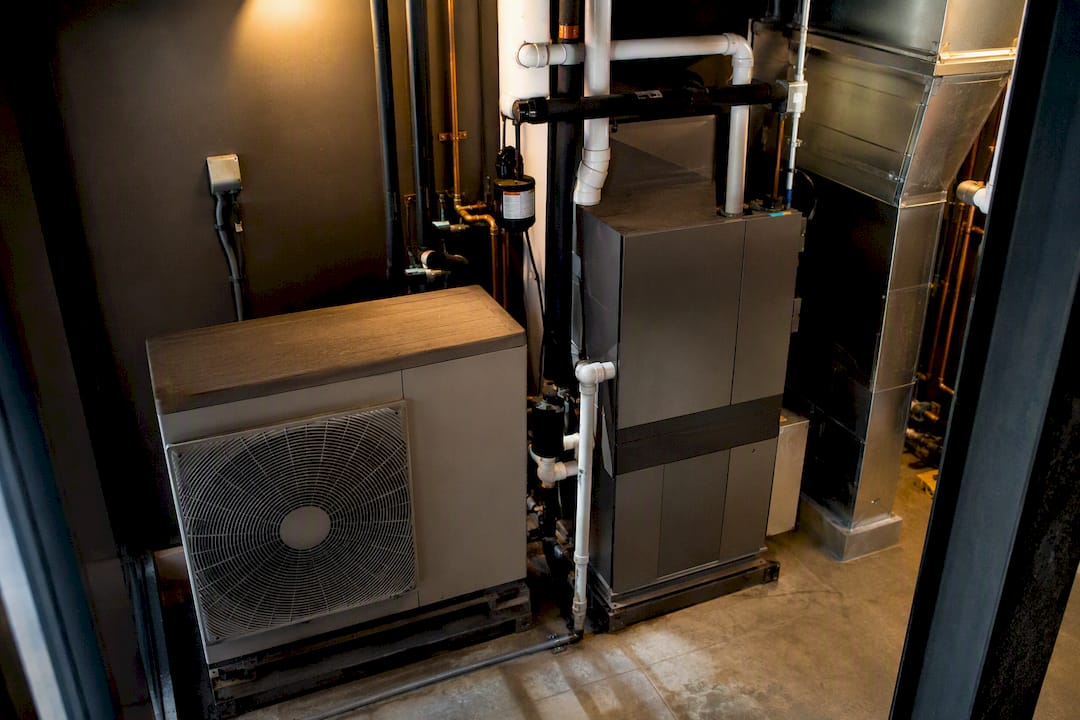
For a commercial tenant improvement or warehouse retrofit in Metro Vancouver, a cold-climate heat pump handles the bulk of the heating season efficiently, but a gas furnace or rooftop unit still earns its place for peak-load reliability and simpler electrical planning. The right call depends less on brand preference and more on your building’s envelope, existing gas service, electrical capacity, and how the space is occupied. That is a mechanical and permitting decision as much as an equipment one, and it belongs inside the broader scope of your renovation, not bolted on afterward.
TL;DR:
- Heat pumps perform well down to minus 20 degrees Celsius, but sizing and electrical capacity are critical to ensure consistent comfort in cold weather.
- Gas furnaces provide reliable, consistent heat regardless of outdoor temperature, making them suitable for large-volume or industrial spaces with high peak loads.
- A dual-fuel system combining a heat pump with a gas furnace can reduce emissions by up to 30% and typically covers 60% to 70% of the heating season efficiently.
- Upfront costs for heat pumps are higher, but rebates and regional energy costs influence the payback period, especially when replacing older or electric systems.
- Proper load calculation, electrical planning, and permit coordination are essential to prevent cost overruns and ensure the HVAC retrofit aligns with broader renovation goals.
Table of Contents
- Heat pump vs furnace at a glance for commercial buildouts
- How commercial heat pumps handle Vancouver’s cold-climate conditions
- How commercial furnaces work and what AFUE actually measures
- Seasonal coverage and where cost efficiency actually plays out
- What HVAC replacement actually costs and where rebates apply
- Dual-fuel systems: the practical middle ground for commercial retrofits
- Sizing, ductwork and electrical capacity for HVAC retrofits
- Maintenance schedules and how long each system lasts
- Emissions differences between heating systems
- Coordinating HVAC retrofits inside a commercial renovation
- Editorial take: cold-climate practicality over brand loyalty
- How Multigroup coordinates HVAC upgrades inside your renovation
- Sources
- FAQ
Heat pump vs furnace at a glance for commercial buildouts
Property managers and tenants evaluating HVAC replacement during a renovation are really weighing two different value propositions.
Heat pumps:
- Pull double duty for heating and cooling from one system, which simplifies rooftop or mechanical room space planning.
- Carry higher upfront equipment cost, but cold-climate models now perform well down to −20°C or colder.
- Best for tenants with existing electrical capacity and moderate heating loads, such as offices and retail units.
Gas furnaces or rooftop gas units:
- Deliver consistent output regardless of outdoor temperature, which matters for large-volume spaces like warehouses.
- Lower equipment cost in many cases, but ongoing gas costs and combustion venting add code requirements.
- Best for industrial and warehouse spaces where recovery time after door openings matters more than efficiency.
Payback direction generally favours heat pumps in mild coastal climates like Metro Vancouver, though the timeline varies by tenant usage pattern. Many commercial retrofits land on a dual-fuel configuration, keeping gas as backup while a heat pump carries most of the load.
How commercial heat pumps handle Vancouver’s cold-climate conditions
A heat pump does not generate heat the way a furnace does. It extracts heat from outdoor air and moves it indoors through a refrigerant cycle, which is why efficiency is measured in coefficient of performance (COP) rather than a fixed percentage.
Statistic callout: Cold-climate air-source heat pumps can reach COPs of roughly 2.0 to 5.4 in milder conditions, dropping to about 1.1 to 3.7 once outdoor temperatures hit −8°C.
That range still beats straight electric-resistance heating even on a cold Metro Vancouver morning. The practical trade off for tenants is comfort character: heat pumps deliver lower discharge air temperature over longer run cycles, so retail floors or offices feel a steadier warmth rather than the quick blast a furnace produces. Correct equipment sizing matters more here than with combustion systems, since an undersized unit struggles precisely when the building needs it most.
How commercial furnaces work and what AFUE actually measures
A gas furnace burns natural gas to heat air directly, and its efficiency is expressed as Annual Fuel Utilization Efficiency (AFUE), the percentage of fuel energy converted to usable heat rather than lost up the flue. Modern condensing furnaces and rooftop gas units typically run 95% to 98% AFUE, meaning very little energy is wasted in combustion.
The advantage that matters most in a warehouse or industrial retrofit is consistency: a furnace produces the same output whether it’s 5°C or −15°C outside, with no efficiency curve to account for in load planning. That reliability comes with obligations. Combustion appliances need proper venting, carbon monoxide detection, and BC Building Code compliant clearances, plus annual inspection and burner service to keep them operating safely and within warranty terms.
Seasonal coverage and where cost efficiency actually plays out
Efficiency on paper and efficiency across a real heating season are different things, and this is where a lot of tenant assumptions go wrong. A heat pump doesn’t need to carry 100% of a building’s load to deliver most of the savings.
- In many Canadian climate zones, a heat pump covers a majority of the heating season before a backup source takes over, per government dual-fuel research.
- CanmetENERGY’s cost-effectiveness analysis found cold-climate heat pumps consistently beat electric-resistance and oil heating on operating cost, with more modest gains against natural gas depending on the region.
Statistic callout: Estimated annual savings run $700 to $1,900 versus electric resistance and $1,000 to $3,500 versus oil, but only $50 to $150 versus natural gas in many regions, since gas remains relatively inexpensive in parts of the country.
For a commercial space, that means the economic case leans heavily on what you’re replacing. Swapping out an aging oil or electric-resistance system is a clear win. Swapping a serviceable gas furnace is a smaller, still real, gain that depends on your utility’s rate structure and how well insulated and air-sealed the space already is.
What HVAC replacement actually costs and where rebates apply
Commercial HVAC budgets vary widely by building size, existing infrastructure, and whether ductwork or electrical service needs upgrading alongside the equipment. As a general planning range, a cold-climate heat pump system for a mid-size commercial unit often lands higher upfront than an equivalent gas furnace or rooftop unit, with the gap narrowing once rebates are applied.
- Equipment and installation — budget conservatively and get at least three comparable quotes before locking in scope.
- Ductwork and electrical upgrades — older buildings frequently need panel capacity increases or duct modifications, which belong in the same contract, not a change order later.
- Rebates and incentives — provincial and utility programs periodically offer commercial heat pump incentives; check current BC Hydro and FortisBC commercial programs before finalizing your budget, since availability shifts year to year.
- 10-year total cost framing — total cost of ownership folds in operating costs and expected equipment life, and usually gives a clearer signal than comparing sticker prices side by side.
Pro Tip: Ask your contractor to model both systems against your actual utility rate schedule, not a generic average. Commercial electricity and gas rates can shift the payback math by years in either direction.
Dual-fuel systems: the practical middle ground for commercial retrofits
A dual-fuel, or hybrid, system pairs a heat pump with a gas furnace and a controller that automatically switches between them at a set outdoor “balance point” temperature. Below that point, the furnace takes over because combustion heating stays consistent regardless of how cold it gets outside.
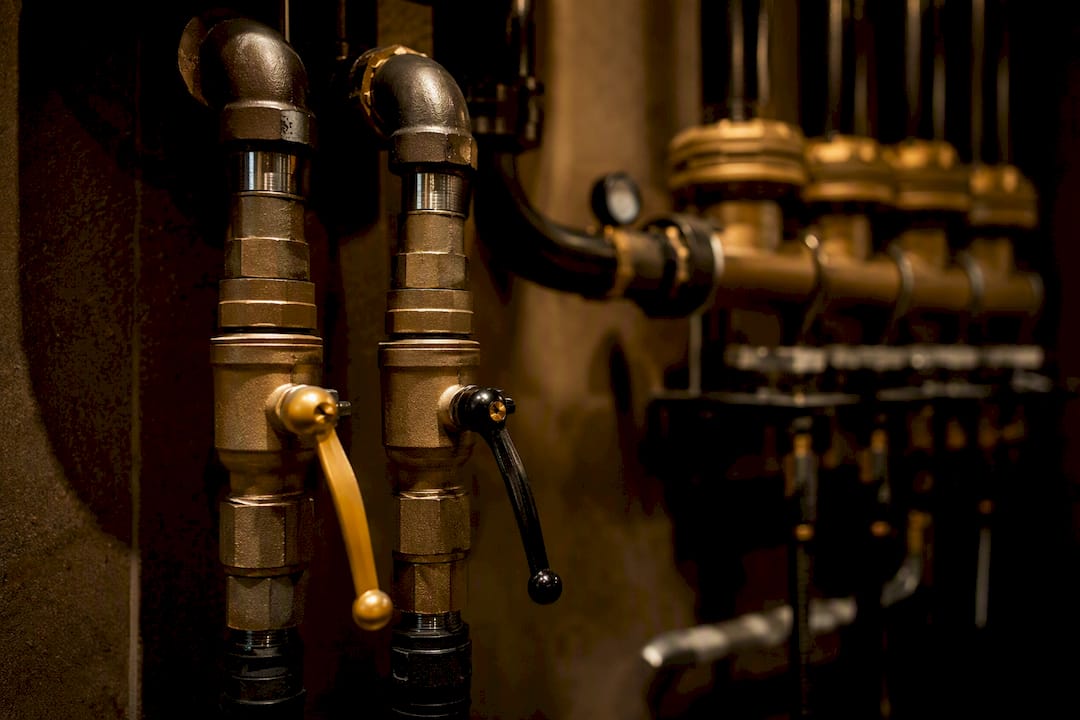
Government research on dual-fuel adoption reports emissions reductions of up to 30% compared with gas-only systems, with the heat pump typically running for 60% to 70% of the season. For tenants with existing gas service already in place, this is often the lowest-friction retrofit path: you keep the furnace as a proven backup while capturing most of the heat pump’s efficiency gains. FortisBC’s guidance on dual-fuel systems notes that commissioning the balance point correctly, and coordinating it with existing furnace controls, is what separates a smoothly running hybrid system from a fussy one.
Sizing, ductwork and electrical capacity for HVAC retrofits
Getting the mechanical scope right before construction starts prevents the change orders that blow up commercial renovation budgets.
- Load calculation first. A Manual J style load calculation should drive equipment selection, not a rule-of-thumb square footage estimate. Oversized or undersized systems waste money either way.
- Airflow compatibility. Heat pumps typically require higher continuous airflow than furnaces, and older ductwork sized for a gas system may need modification or a supplemental fan.
- Electrical service. Confirm panel capacity early. A heat pump retrofit added to an already tight commercial electrical service can trigger a utility upgrade that adds weeks to the schedule.
- Permits and inspections. BC Building Code mechanical permits and inspections apply to both fuel changes and electrical upgrades, and timelines should be built into the project schedule from day one, not discovered midway through.
Maintenance schedules and how long each system lasts
Heat pumps and gas furnaces both typically last a decade or two with proper maintenance, though usage intensity in a commercial setting can shorten that range. Heat pumps need annual coil cleaning and refrigerant checks; furnaces need annual burner and heat exchanger inspection plus carbon monoxide safety testing. Rising repair frequency, or a system needing major component replacement past the ten-year mark, is usually the signal to plan replacement rather than another repair.
Emissions differences between heating systems
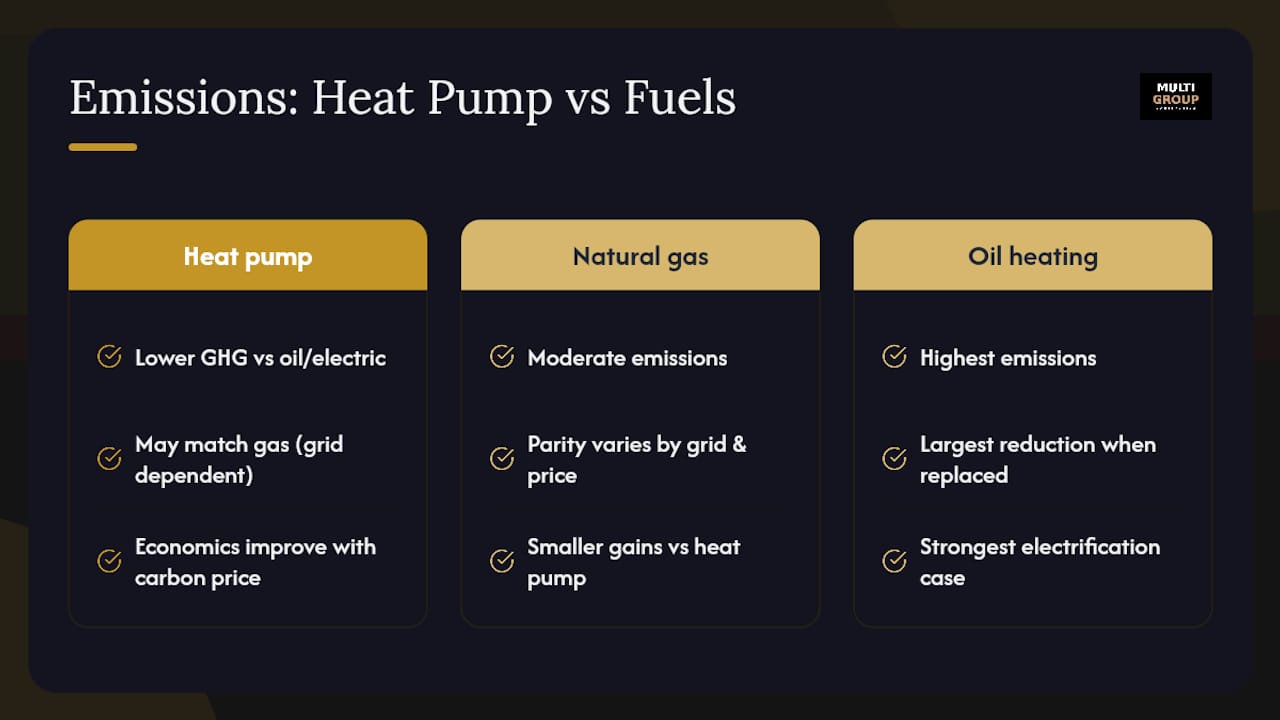
Heat pumps cut greenhouse gas emissions substantially compared with oil or electric-resistance heating, since they move heat rather than generate it from combustion or resistive elements. Parity with natural gas depends heavily on your province’s electricity grid mix and local gas pricing. CanmetENERGY’s findings show the largest emissions gains come from replacing oil systems, with smaller but still measurable gains over gas. As carbon pricing trends upward, the economic case for electrification tends to strengthen over the equipment’s service life, not just at installation.
Coordinating HVAC retrofits inside a commercial renovation
Swapping heating systems rarely happens in isolation on a commercial project. It usually overlaps with tenant improvements, electrical upgrades, and finishes work, and sequencing matters. A checklist worth running with any contractor:
- Confirm mechanical permits and BC Building Code inspections are scheduled alongside, not after, other trade permits.
- Ask how HVAC work will be staged if the space stays partially occupied during construction.
- Request phasing that keeps ductwork, electrical, and ceiling work coordinated rather than sequential rework.
- Get comparable quotes by specifying the same load calculation and equipment tier across bidders.
Editorial take: cold-climate practicality over brand loyalty
The research here supports a fairly unglamorous conclusion: most Metro Vancouver commercial spaces don’t need a philosophical commitment to gas or electric heating, they need the right equipment sized for how the space is actually used. Conventional advice tends to frame this as an efficiency contest, heat pump wins on paper, so it must be the better choice everywhere. That framing skips the part that actually determines outcomes: existing gas service, electrical panel headroom, and how tolerant the occupancy is of a hybrid switchover.
What gets underrated is the 10-year cost lens. A heat pump that saves modestly against gas but requires a $15,000 electrical upgrade is a different decision than the same heat pump in a building with spare panel capacity. Prioritize the load calculation and the electrical assessment before comparing equipment brochures. Dual-fuel is not a compromise position, it is often the more disciplined engineering choice for a building with existing gas infrastructure and a genuine winter cold-load risk.
— MultigroupTeam
How Multigroup coordinates HVAC upgrades inside your renovation
Swapping a heating system rarely stays isolated once construction opens up ceilings and walls. Multigroup manages the permits, trade sequencing, and inspections that keep an HVAC retrofit from derailing a broader renovation timeline, particularly in occupied buildings where phasing around tenants matters as much as the mechanical scope itself.

Whether the project is a full commercial renovation, a retail buildout, or tenant improvements where HVAC is one line item among many, Multigroup coordinates the mechanical, electrical, and structural trades under one schedule instead of leaving a tenant to manage separate contractors against separate timelines. Warehouse and industrial retrofits get the same treatment through our warehouse renovation services, and restaurant or coffee shop operators can fold HVAC upgrades directly into a restaurant renovation scope. If your building’s next step is an office renovation with a heating system swap on the table, get in touch with Multigroup for a project consultation and a comparable quote before your next permit deadline.
Sources
Key references for the figures and standards cited above: Natural Resources Canada’s heat pump basics for COP ranges, the CanmetENERGY cost-effectiveness study for regional savings data, HRAI’s commentary on dual-fuel adoption for industry perspective, and Multigroup’s own guide to energy efficiency in construction for envelope considerations that affect any HVAC decision. For contractor-side replacement planning tips, see this HVAC replacement guide.
- Heat pump basics — Natural Resources Canada
- Cost-effectiveness of cold-climate air-source heat pumps in Canadian homes — CanmetENERGY
- Dual-fuel system benefits — Government of Canada summary
- Why a dual-fuel heating system could solve your home appliance duel — FortisBC
FAQ
What are the disadvantages of a heat pump?
Heat pump output drops as outdoor temperature falls, they carry higher upfront equipment cost than a comparable furnace, and they often need more continuous airflow, which can require ductwork or electrical upgrades in older buildings.
How much does a heat pump cost to install for a mid-size commercial space?
Costs vary widely by building size, ductwork condition, and electrical capacity, so a Manual J load calculation and at least three contractor quotes are the only reliable way to budget accurately.
Why is my heating bill higher after switching to a heat pump?
This usually points to incorrect sizing, a poorly commissioned balance point in a dual-fuel setup, or a rate structure where electricity costs more per unit of heat than the gas it replaced.
What is the best heating system for a commercial building in a cold Canadian climate?
For most Metro Vancouver commercial retrofits, a cold-climate heat pump paired with gas backup in a dual-fuel configuration balances efficiency, emissions, and cold-weather reliability better than either system alone, particularly where gas service already exists.
Is a dual-fuel system worth the added complexity?
For buildings with existing gas service and real winter cold-load risk, yes.