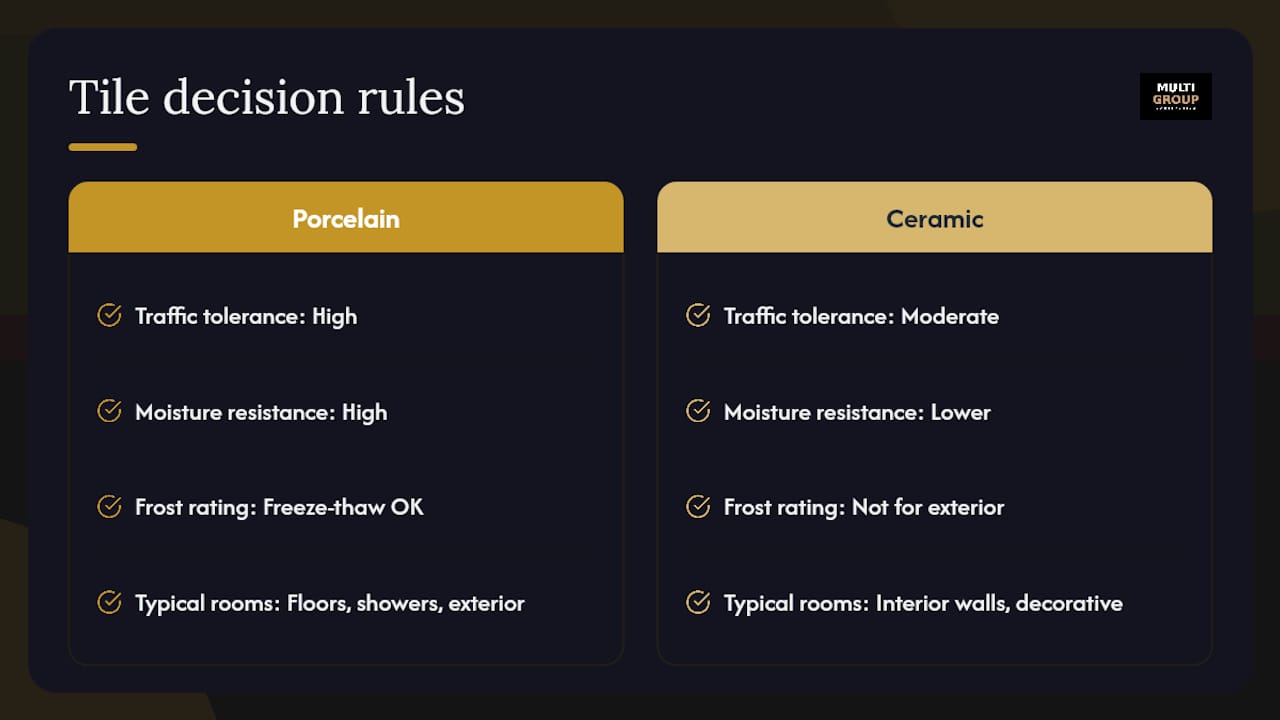
Porcelain is the default for floors, showers, and any exterior or freeze-thaw exposure because its water absorption is classified as impervious (0.5% or lower), giving it far greater durability than standard ceramic. Ceramic remains the sensible, lower-cost pick for interior walls, decorative surfaces, and low-traffic areas. The right call always comes down to lab test data, expected traffic, and moisture exposure, not showroom appearance.
TL;DR:
- Porcelain is suitable for floors, showers, and outdoor surfaces due to its low water absorption of 0.5% or less, confirmed by ASTM C373 testing.
- Ceramic remains a budget-friendly option for interior walls, backsplashes, and low-traffic areas, with water absorption typically exceeding 3%.
- Proper specification requires requesting the test reports, checking the cut edge for consistent color, and verifying the tile’s weight and density.
- Installation costs for porcelain are higher because of the need for diamond blades and strong mortars, but it offers longer-lasting durability and stain resistance.
- For high-traffic or exterior applications, always opt for porcelain with documented frost or freeze-thaw resistance, especially in cold climates.
Table of Contents
- Porcelain vs ceramic tile durability: how manufacturing and testing decide it
- Where porcelain and ceramic actually belong on a job
- How to tell porcelain from ceramic before you buy
- Installation and maintenance costs that follow you for years
- What Multigroup checks before any tile order gets approved
- Decision rules by room and budget
- Specifying tile on occupied commercial buildings
- How Multigroup handles tile specification and procurement
- Sources
- FAQ
Porcelain vs ceramic tile durability: how manufacturing and testing decide it
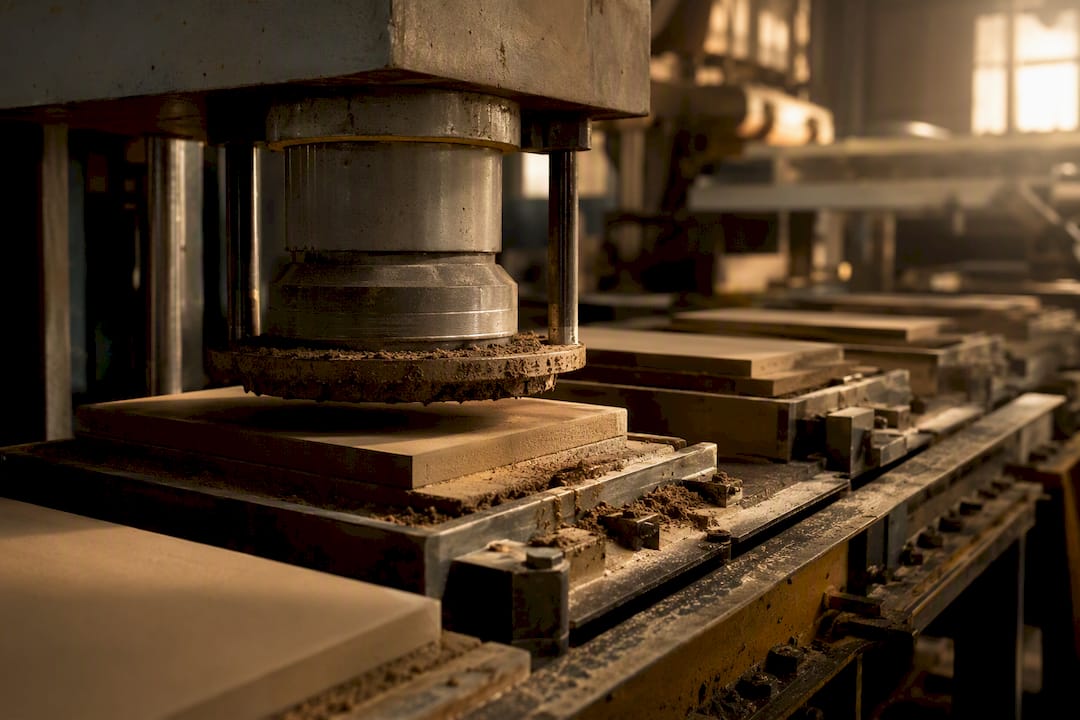
The difference between porcelain and ceramic starts in the clay body and the kiln, not on the showroom floor. Porcelain is made from a denser, finer clay blend, typically pressed under high pressure (dust pressed) and fired at higher temperatures than standard ceramic. That process drives out more air and moisture from the body, leaving a tile with far less internal porosity. Ceramic tile uses a coarser, more porous clay body, is often extruded rather than pressed, and fires at lower temperatures, which keeps costs down but leaves more open pore structure behind.
That pore structure is exactly what ANSI A137.1 measures when it defines porcelain tile: water absorption of 0.5% or less, tested to ASTM C373. The test fractures a specimen, boils it for five hours, then soaks it for 24 more, a regimen tough enough to expose porosity that gentler methods miss. Some specifiers lean on ISO test procedures instead, but ISO 10545-3’s shorter boil and soak cycle can under-report porosity for tile sitting close to that 0.5% line, which is why ASTM C373 remains the preferred verification method on North American specification sheets.
Bulk specific gravity and density track alongside absorption. A denser, less porous tile resists the freeze-thaw cracking that happens when trapped moisture expands, and it holds up better under sustained point loads like shelving legs or hand trucks.
| Property | Porcelain | Ceramic |
|---|---|---|
| Water absorption | 0.5% or less | higher than porcelain, typically greater than 3% |
| Common PEI class | III to V | ranges from I to III |
| Typical application | Floors, showers, exterior | Walls, backsplashes, low-traffic areas |
Two things to keep in mind before you spec by absorption number alone:
- A tile advertised as “porcelain” without a test report is a claim, not a fact.
- PEI class and water absorption measure different things and both matter for a full spec.
Where porcelain and ceramic actually belong on a job
Porcelain earns its place on high-traffic floors, commercial lobbies, shower floors, and exterior terraces, provided the product carries an impervious rating and, for outdoor use, a documented frost rating. Ceramic is the right call for interior walls, decorative backsplashes, and lower-traffic residential floors or back-of-house areas where budget matters more than abuse resistance.
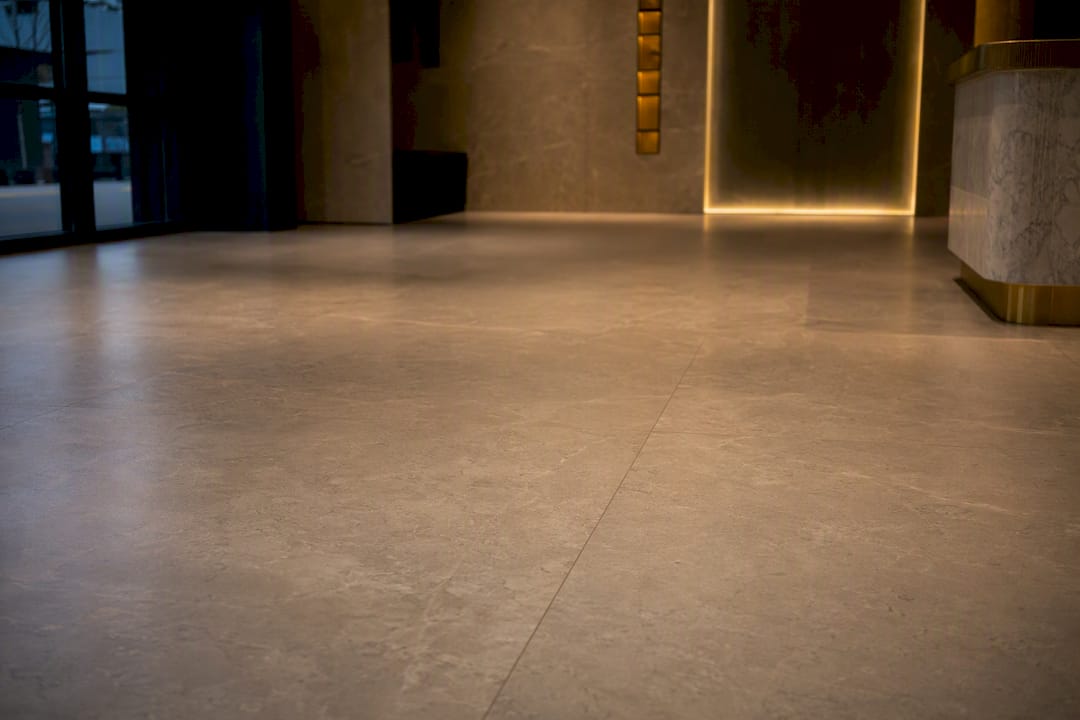
PEI class tells you how well a glazed tile resists abrasion, running from PEI I (walls only) through PEI V (heavy commercial floors). But PEI has nothing to do with slip, and a high PEI number does not mean a tile is safe underfoot when wet. Slip resistance depends on the finish and DCOF (dynamic coefficient of friction) rating, which applies equally to porcelain and ceramic. A polished porcelain floor with a low DCOF can be more hazardous in a wet retail entry than a textured ceramic tile with a modest PEI class.
A few real-world scenarios make the logic concrete:
- Kitchen floor: porcelain, PEI III or IV, DCOF appropriate for a residential wet zone.
- Shower stall: porcelain with an impervious rating on the floor; ceramic is acceptable on shower walls above the splash zone.
- Retail entry: porcelain, PEI IV–V, high DCOF for wet-weather foot traffic.
- Outdoor patio: porcelain rated for frost resistance, never standard ceramic in a freeze-thaw climate.
Pro Tip: Ask for the DCOF report separately from the PEI report. Suppliers sometimes quote one and assume you’ll accept it as proof of the other.
How to tell porcelain from ceramic before you buy
You can’t always tell by looking, and that’s the point of the paperwork.
- Request the test report. Ask the supplier for ASTM C373 water-absorption results or PTCA certification, which verifies the tile actually meets the ANSI A137.1 threshold rather than just carrying the name on the box.
- Check the cut edge. Porcelain typically shows consistent colour through the body; ceramic often reveals a lighter, more porous substrate under a coloured glaze.
- Feel the weight. Porcelain is denser for the same size and thickness, a rough but useful field check.
- Watch for red flags. Unverified “porcelain” labelling, missing PEI or DCOF numbers, or shade-lot documentation that doesn’t match across pallets are all reasons to pause an order.
Installation and maintenance costs that follow you for years
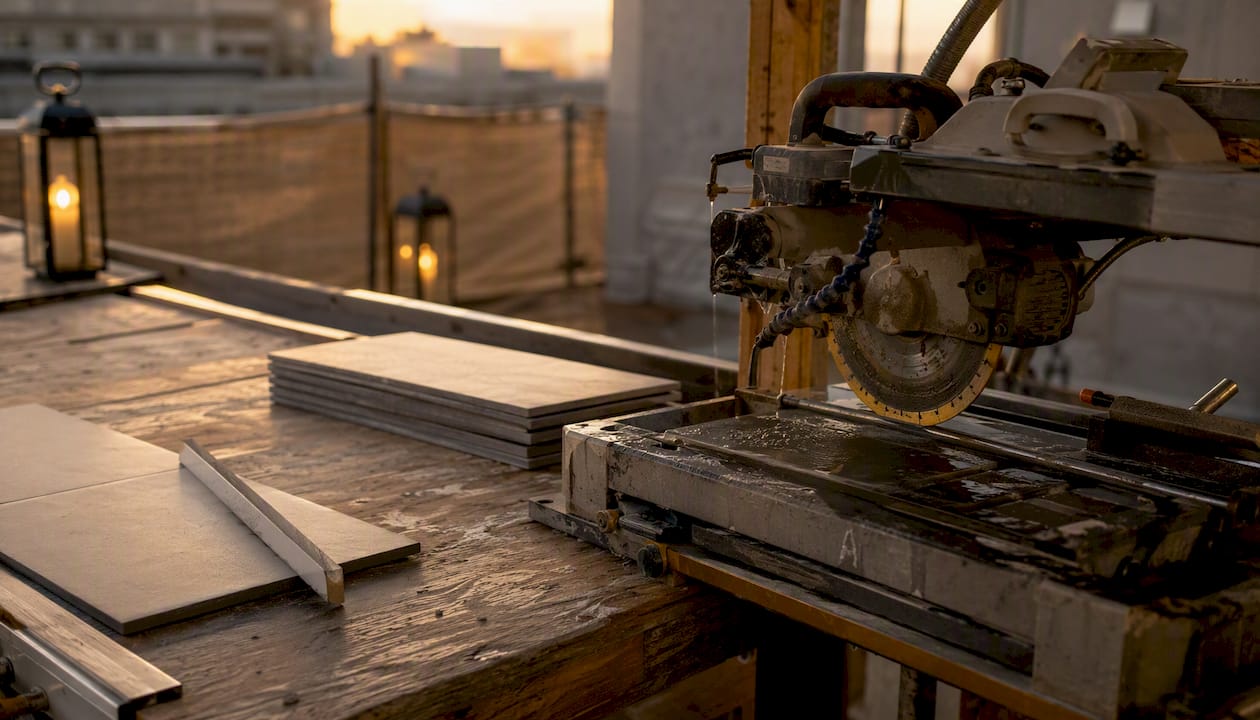
Porcelain’s density that makes it durable also makes it harder to install. Cutting requires diamond blades and, often, wet saws, and setting it demands stronger, polymer-modified mortars rather than standard thinset. Ceramic cuts more easily with basic tools, which keeps labour hours and blade replacement costs down on straightforward residential jobs.
The maintenance gap shows up over time, not on installation day.
- Through-body porcelain retains its colour through the full thickness, so a chip in a busy corridor is far less visible than the same chip on glazed ceramic, which exposes a different-coloured body underneath.
- Porcelain resists staining and abrasion better over years of foot traffic, cart wheels, and cleaning chemicals.
- Ceramic is cheaper to buy and install upfront, but touch-up repairs and shorter service life in high-use areas can erode that saving over a ten-year hold. A broader look at what makes flooring durable covers similar lifecycle trade-offs across material types.
- Grout selection and sealing schedules matter for both, but porcelain’s lower porosity means it needs less frequent sealing in wet areas.
What Multigroup checks before any tile order gets approved
A specification file for a commercial or high-value residential job should include, at minimum:
- ASTM C373 water-absorption results, PEI class or ASTM C501 abrasion index for unglazed porcelain, and DCOF slip-test reports for any wet or entry-zone application.
- Frost or freeze-thaw evidence (ASTM C1026) for any exterior installation exposed to a Canadian winter.
- Shade-lot confirmation and pallet packaging checks, with supplier traceability documented for the full order, not just a sample box.
- Site compatibility checks, covering substrate flatness tolerances, compatibility with heated flooring systems, and rectified-tile joint width guidance from the manufacturer.
Pro Tip: Batch and shade-lot mismatch is one of the most common causes of visible seams in large commercial floors. Build a holdback contingency into your procurement contract before the order ships, not after installation starts.
Decision rules by room and budget
Pick porcelain for floors, showers, and any exterior surface where moisture, traffic, or freeze-thaw exposure comes into play. Pick ceramic for interior walls and decorative applications where cost and ease of cutting outweigh the need for extreme durability. When a commercial build is on the line and you’re unsure, ask for lab evidence first and default to porcelain with impervious rating for floors and wet areas. The paperwork costs nothing; a failed floor does.
Specifying tile on occupied commercial buildings
Multigroup prioritizes durability and maintenance load over showroom looks when specifying tile for tenant improvements and retail fit-outs, because a floor that fails at month eighteen costs a tenant far more than the material premium ever would have. Working inside occupied buildings adds its own friction: dust control, after-hours cutting, and permit sequencing all shape which material and installation method actually fit the schedule. If your project needs a specification review or a site survey before you commit to an order, that’s exactly the kind of groundwork worth getting right early.
How Multigroup handles tile specification and procurement
Choosing between porcelain and ceramic is only half the job. Getting the right supplier, the right test documentation, and a crew that installs it correctly is the other half, and it’s where most commercial timelines actually slip. Multigroup manages specification review, supplier vetting, procurement, and full project management for tenant improvements, retail buildouts, office renovations, and restaurant and coffee shop renovations across Metro Vancouver.
That means someone checks the ASTM C373 report before the order ships, not after the tile is already on site with a mismatched shade lot. For larger properties, Multigroup also handles warehouse renovations and broader commercial renovation scopes where floor specification is one piece of a bigger base-building and tenant-scope puzzle. If you’re planning a fit-out or renovation and need the tile specification handled correctly from the first supplier call, request a quote or schedule a specification audit with Multigroup before you sign off on materials.
FAQ
What are the disadvantages of porcelain tile?
Porcelain costs more to buy and install because it requires diamond cutting tools and stronger mortars, and its hardness makes it more brittle to drop during handling than softer ceramic tile.
Is porcelain or ceramic a better tile?
Neither is universally “better.” Porcelain wins for floors, showers, and exterior use because of its low water absorption and higher PEI classes, while ceramic is a perfectly sound, lower-cost choice for interior walls and light-use surfaces.
How do I tell if my tile is ceramic or porcelain?
Ask for the ASTM C373 water-absorption report or PTCA certification; on installed tile, check the cut edge for through-body colour and compare the weight and density against a known sample.
Should you use ceramic or porcelain tile in a shower?
Porcelain is the safer choice for shower floors because of its impervious water-absorption rating, though ceramic can work on shower walls above the wet zone if paired with proper sealing and a suitable DCOF-rated finish.