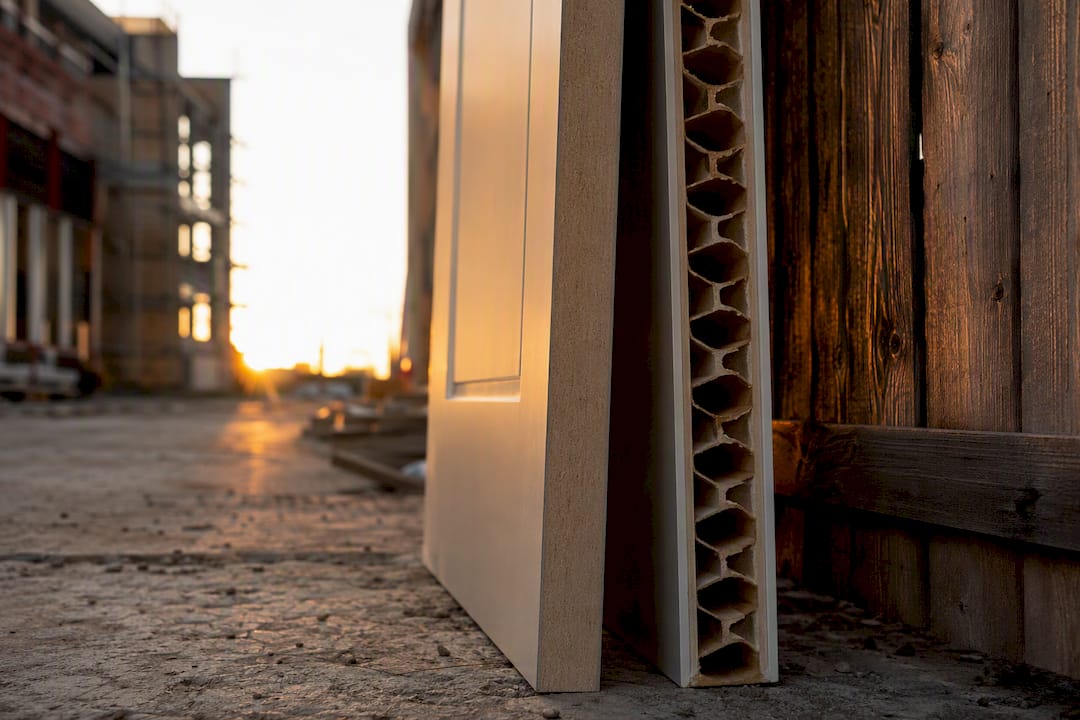
Choose solid core for bedrooms, home offices, basement suites, and anywhere sound or security matter. Choose hollow core for closets, pantries, and other low-traffic spots where budget rules the decision. The gap between them is measurable: solid core doors typically run an STC rating of 30 to 35 versus 16 to 25 for hollow core, and a solid slab usually costs CAD $70 to $250 or more against roughly CAD $25 to $150 for hollow core. That difference in mass changes how a room feels, not just how it sounds.
- Solid core: better sound isolation, longer lifespan, higher upfront cost
- Hollow core: lighter, cheaper, faster to install, weaker on privacy and durability
Keep reading for the room-by-room breakdown, the exact tests to check what’s already hanging in your hallway, and how a licensed contractor specs doors on a real renovation.
Key Takeaways
Solid core doors outperform hollow core on sound and durability by a wide margin, while hollow core wins on cost and weight for low-priority rooms.
| Point | Details |
|---|---|
| Sound performance | Solid core rates STC 30 to 35 versus 16 to 25 for hollow core, a real, audible difference. |
| Weight changes hardware | Solid core slabs (55 to 80 lb) need a third hinge and longer screws into the stud. |
| Cost spread | Hollow core runs about CAD $25 to $150 per slab; solid core runs CAD $70 to $250+. |
| Prioritize by room | Put solid core in bedrooms, offices, and suites; save hollow core for closets and pantries. |
| Contractor-managed installs | Multigroup specs door cores against BC Building Code fire-separation rules on every tenant improvement and residential project. |
Table of Contents
- Solid core doors: what they are and where they earn their keep
- Hollow core doors: lightweight, affordable, and limited by design
- Sound, durability, cost, and code: a side-by-side look
- Which rooms need solid core, and where you can save
- How can you tell if your existing door is hollow or solid?
- How Multigroup specs and installs door cores on a renovation
- Sources
- FAQ
Solid core doors: what they are and where they earn their keep
A solid core door is built from an engineered composite, usually MDF or particleboard, pressed and wrapped in a wood veneer or laminate skin. It’s not the same as a “solid wood” door, which is milled from actual timber and costs considerably more. The composite core is what does the work here: density blocks sound and resists impact in a way a hollow shell never can.
That density shows up in the numbers. Solid core doors typically land in the 30 to 35 STC range, which is roughly a 5 to 10 decibel improvement over hollow core in practical terms, enough to blur normal conversation into an indistinct murmur instead of full sentences. A standard 30×80 slab weighs 55 to 80 lb, which means installers add a third hinge and use longer screws driven into the stud, not just the jamb, to stop long-term sag.
- STC range: approximately 30 to 35
- Weight (30×80 slab): approximately 55 to 80 lb
- Price range: approximately CAD $70 to $250+ per slab
- Expected lifespan: 40+ years with occasional refinishing
Expect to pay CAD $70 to $250 or more per slab depending on finish and whether it’s prehung. In exchange, you get a door that can be sanded, repainted, and rehung for decades rather than replaced.
Hollow core doors: lightweight, affordable, and limited by design
A hollow core door is built around a honeycomb of cardboard or lightweight plastic ribbing, sandwiched between two thin wood or hardboard skins. There’s almost nothing inside. That’s the entire point: less material means less weight, less cost, and a door that one person can hang solo in twenty minutes.
The trade off is acoustic and structural. Hollow core doors sit in the 16 to 25 STC range, which barely muffles a raised voice through a closed door. A 30×80 slab weighs only 25 to 35 lb, light enough for standard two-hinge hardware and no jamb reinforcement.
- STC range: approximately 16 to 25
- Weight (30×80 slab): approximately 25 to 35 lb
- Price range: approximately CAD $25 to $150 per slab
- Expected lifespan: 20 to 30 years, shorter with heavy household traffic
Pricing runs roughly CAD $25 to $150 per slab, which makes hollow core the obvious pick for closets and low-traffic rooms. Just know a doorknob-sized dent is often permanent. There’s no veneer thick enough to sand out a puncture in a honeycomb core.
Sound, durability, cost, and code: a side-by-side look
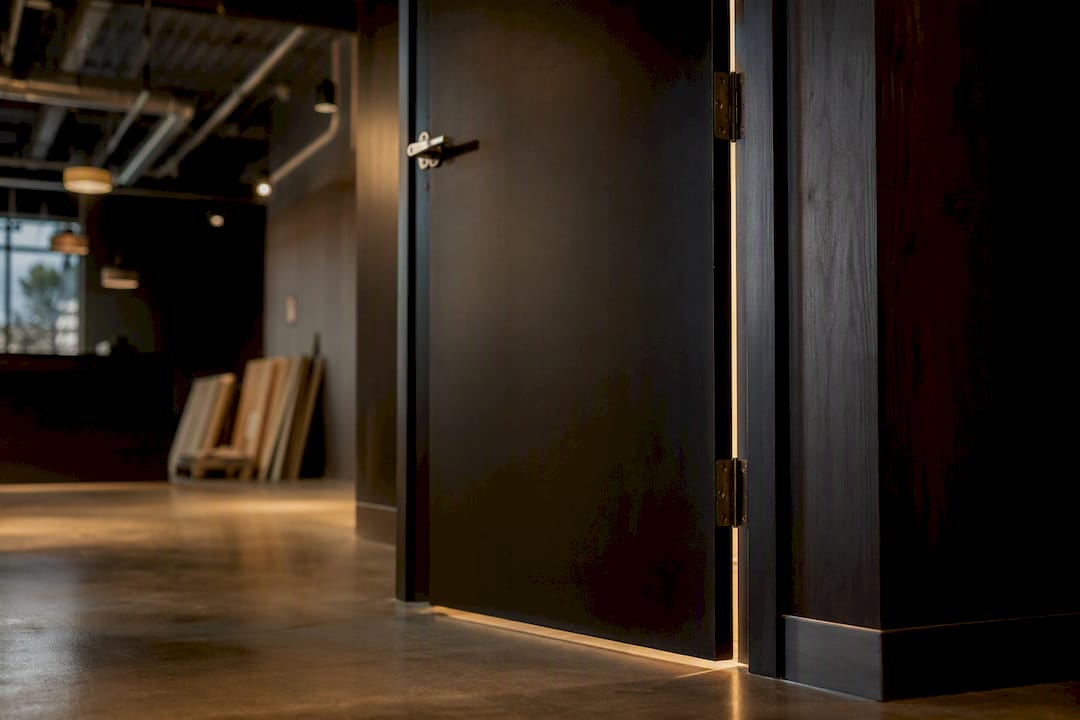
Sound is where the two categories diverge hardest. That 30 to 35 versus 16 to 25 STC gap means a solid core door reduces a phone call or TV to background hum, while hollow core lets full sentences travel through. But mass alone doesn’t finish the job. Frame gaps, worn weatherstripping, and an undercut threshold can undo a solid door’s advantage just as fast as choosing the wrong core. A solid slab hung sloppily performs worse than a well sealed hollow one.
Weight drives installation cost. Moving from 25 to 35 lb up to 55 to 80 lb means adding a third hinge, switching to 3 inch screws anchored into the stud, and sometimes reinforcing the jamb itself, a detail contractors build into labour estimates from the start.
- Sound: solid core wins decisively; hollow core is adequate only for low-privacy spaces
- Durability: solid core resists dents and holds hardware longer; hollow core dents easily and is hard to repair
- Weight/installation: hollow core is a one-person job; solid core needs extra hardware and often a second set of hands
- Cost: hollow core saves CAD $45 to $100+ per slab upfront; solid core saves money over decades
- Fire/code: fire-rated assemblies are almost always solid core or a specifically certified door; hollow core cannot substitute where code requires a rated door
- Lifespan: solid core typically lasts 40+ years against 20 to 30 for hollow core
If you’re weighing prehung versus slab-only, finish grade also swings the final invoice more than the core type itself, something worth confirming before you commit to a whole-house order.
Which rooms need solid core, and where you can save
You don’t need to upgrade every door in the house. Prioritize solid core where privacy or noise actually matters, and let hollow core handle the rest.
- Master bedroom, home office, basement suite — solid core, no exceptions if sound or resale value matters
- Bathrooms adjacent to living or dining areas — solid core, both for privacy and moisture resistance
- Closets, pantries, utility rooms, secondary bedrooms — hollow core is genuinely fine here
- Rental suites and any fire-separation wall — check code before assuming hollow core is allowed
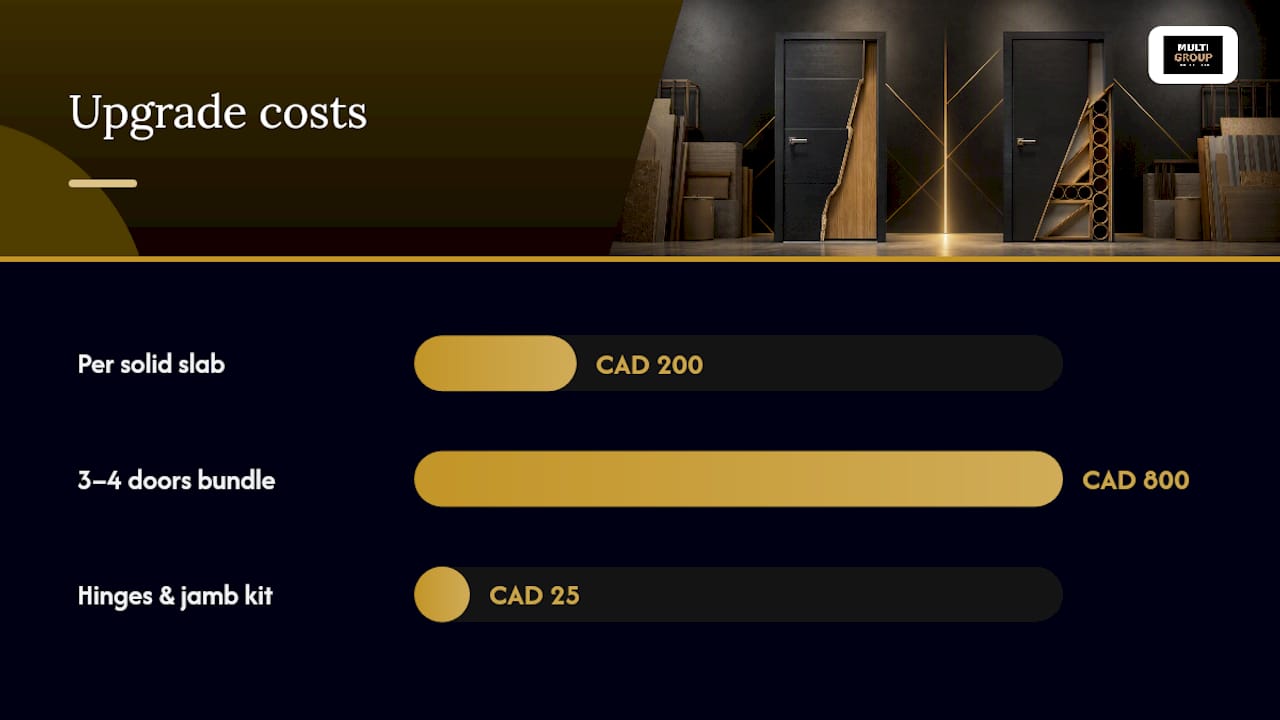
A common mixed strategy: upgrade three or four key doors (bedrooms, office, one bathroom) to solid core at roughly CAD $150 to $250 installed each, and leave the rest hollow. That’s typically CAD $600 to $1,000 for the doors that matter most, well below replacing an entire house’s worth of slabs. Landlords converting a basement to a legal suite should double check fire separation requirements before finalizing door selection.
Pro Tip: If you’re only upgrading a handful of doors, spend the extra CAD $20 to $30 per slab on solid core hinges and a matching jamb kit. A mismatched hinge set is the most common reason a solid door starts sagging within the first year.
How can you tell if your existing door is hollow or solid?
You don’t need a contractor for this. Three quick checks tell you almost everything.
- Knock test: rap your knuckles mid-panel. A hollow, echoey thud means hollow core; a dull, dense thud means solid.
- Weight and edge check: lift the door slightly off its hinges (or just push hard) and look at the top edge for a visible seam between veneer and core. Thin veneer over a honeycomb pattern confirms hollow core.
- Hardware behaviour: loose hinge screws, visible wobble, or a plugged/patched hole near the lockset often point to a hollow door that’s been repaired before.
Pro Tip: If the knock test sounds ambiguous, check the label stamped on the door’s top edge. Fire-rated and solid core doors are almost always marked; if you can’t find a stamp and the door feels light, assume hollow core until proven otherwise.
How Multigroup specs and installs door cores on a renovation
On every tenant improvement or residential project, Multigroup decides core type based on four factors: privacy needs, expected foot traffic, acoustic requirements between units, and whether the wall assembly falls under a fire-separation requirement in the BC Building Code. A medical clinic exam room and a warehouse office get very different door specs, even though both are commercial spaces.
- Confirm fire-rating requirements before ordering, especially in multi-tenant or mixed-use buildings
- Add a third hinge and 3-inch screws into the stud for every solid core install
- Reinforce the jamb where the door swings into high-traffic corridors
- Seal the threshold and weatherstripping to protect the STC rating you paid for
A door spec is never just a product choice on a commercial job. It’s part of the fire-separation plan, the permit drawing, and the final inspection, and getting it wrong after drywall is closed up costs far more than getting it right the first time.
A Multigroup estimate includes the CAD cost range, install timeline, and a permit check before work starts. Request a site visit if your project touches a shared wall or a fire-rated corridor.
What the payback actually looks like on a real unit
We’ve seen a landlord swap just the bedroom and bathroom doors to solid core in a three-unit rental building and get noticeably fewer noise complaints within the first month, without touching the kitchen or closet doors at all. If you’re renovating to sell, solid core in bedrooms and the primary bathroom tends to matter more to buyers than closets ever will. If you’re staying put, spend where you personally notice the noise. For anyone weighing a bigger scope, our cost-saving renovation guide breaks down where else a budget stretches furthest.
— MultigroupTeam
Get a door and renovation quote from Multigroup
Swapping a handful of doors is rarely a standalone job, and knowing what kind of doors are best for interiors helps ensure you choose the right combination for your needs. It usually surfaces alongside a bathroom remodel, a basement suite conversion, or a full tenant improvement, and that’s exactly where a licensed Vancouver general contractor earns its fee: catching the fire-separation detail, the jamb reinforcement, and the permit requirement before they become a change order.
Multigroup handles commercial renovation projects across Metro Vancouver, from tenant improvements for medical clinics and offices to full retail buildouts and restaurant renovations where fire-rated door assemblies are non-negotiable under the BC Building Code. A site visit gets you a CAD estimate, a realistic timeline, and a permit check up front, so you’re not guessing whether your rated corridor door meets code. If your project is a warehouse office buildout or a multi-unit residential conversion, request a quote through the commercial renovation page and Multigroup will walk the site with you before any door gets ordered.
Sources
- Solid core vs. hollow core interior doors and the difference
- Hollow core vs solid core doors: How to choose interior doors
- Hollow core vs solid core doors buying guide — Lowe’s
- Hollow core vs solid door: How to tell the difference – Interior Doors
FAQ
Is solid core better than hollow core?
For sound isolation, durability, and long-term value, yes. Solid core beats hollow core on nearly every measurable factor except weight and upfront cost.
What are the downsides of solid core doors?
They cost more upfront (CAD $70 to $250+ versus $25 to $150), weigh 55 to 80 lb, and need extra hardware like a third hinge and reinforced jamb to install properly.
How do I tell if my door is hollow or solid core?
Knock on it: a dull thud means solid, an echoey sound means hollow. Check the top edge for a veneer seam and look for wobbly hinge screws as backup clues.
What’s the average lifespan of a solid core door?
Solid core doors typically last 40 years or more with occasional refinishing, compared to 20 to 30 years for hollow core doors under normal household use.
Do solid core doors need special installation?
Yes. Their extra weight usually calls for a third hinge, 3 inch screws anchored into the stud, and sometimes jamb reinforcement, details a licensed contractor accounts for during a tenant improvement or residential renovation.