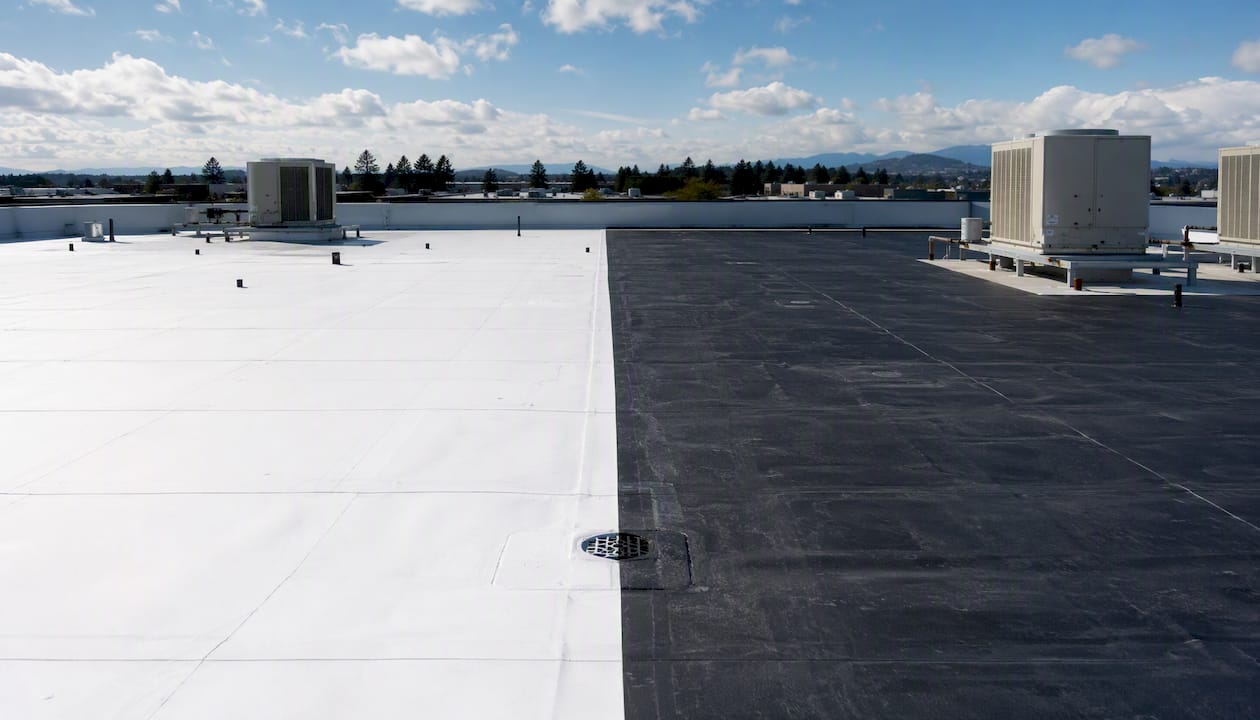
For most commercial low-slope roofs, white TPO is the better default. It cuts cooling costs and welds instead of gluing its seams. EPDM stays the right call when you need the longest proven service life, cold-climate flexibility, or resistance to oils and greases.
- Seam technology (hot-air welding on TPO versus adhesive or tape on EPDM) drives most of the long-term leak risk gap between the two.
- Energy savings from reflective TPO often offset a higher first cost over a 20 to 25 year hold, though EPDM frequently installs 10 to 25% cheaper up front on an equivalent assembly.
- ASTM D4637 and D5538 govern membrane and seam testing. Any quote worth signing should reference them.
Key Takeaways
The right membrane choice depends on hold period, climate exposure, and whether reflectivity or seam simplicity matters more to your building’s operating costs.
| Point | Details |
|---|---|
| Default pick | White TPO suits most commercial low-slope roofs thanks to welded seams and cooling-energy savings. |
| EPDM’s edge | EPDM often costs 10 to 25% less installed and holds up longer in cold climates and under ponding water. |
| Seam risk | TPO’s hot-air welded seams reduce long-term leak risk compared to EPDM’s adhesive or tape seams. |
| Verify before signing | Confirm welder certification, manufacturer formulation data, and whether the warranty is NDL or material-only. |
| Work with a licensed contractor | Multigroup manages inspection, specification, permitting, and installation for commercial reroofs across Metro Vancouver. |
Table of Contents
- TPO vs EPDM at a glance
- What is EPDM roofing made of?
- What is TPO roofing and how is it different?
- TPO vs EPDM: the technical differences that decide your choice
- Which membrane fits your building?
- How to choose a roofing contractor: a checklist and cost guide
- Get a roof assessment before you commit to either membrane
- Sources
- FAQ
TPO vs EPDM at a glance
| Factor | TPO | EPDM |
|---|---|---|
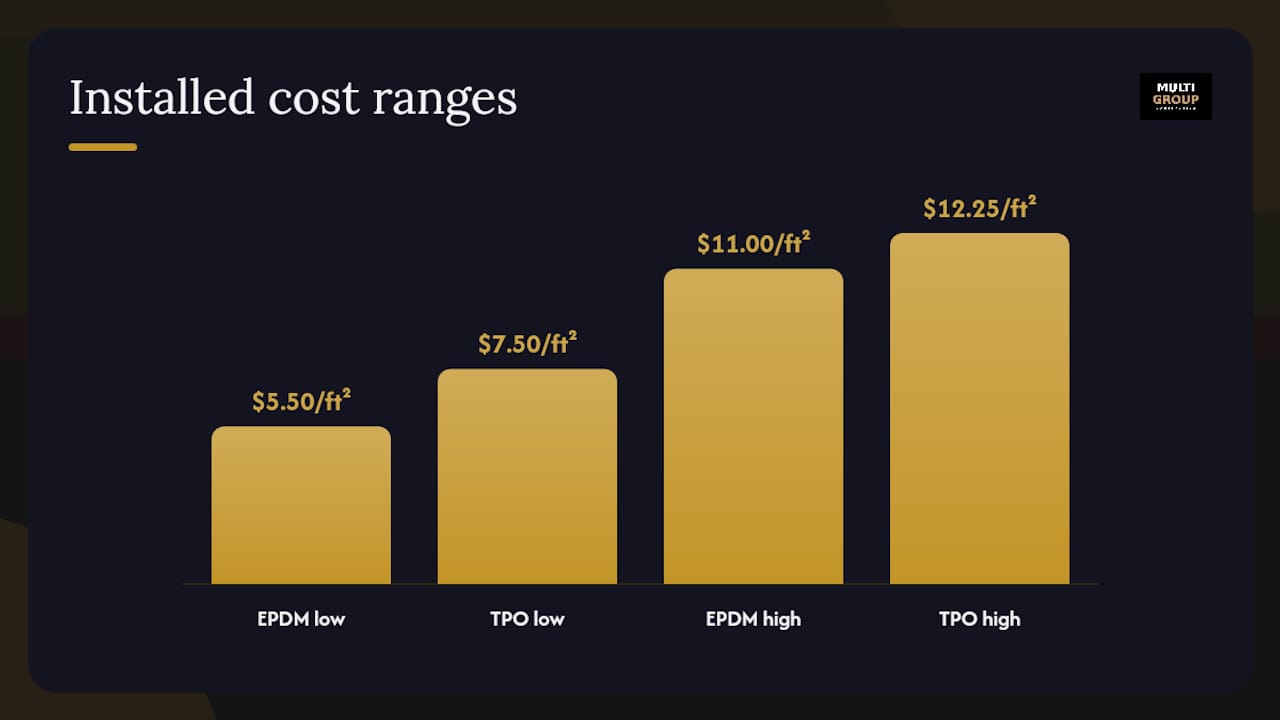
| Installed cost (converted from USD, per source) | Roughly $7.50 to $12.25 CAD/ft² | Roughly $5.50 to $11.00 CAD/ft² |
| Typical lifespan | 20 to 30 years | 30 to 40+ years with proper install |
| Energy/reflectivity | High. White surface lowers cooling load | Low unless a white membrane is specified |
| Seam type & leak risk | Hot-air welded, fused seam, lower long-term risk | Adhesive/tape seam, higher long-term risk |
| Ponding water | Fair, formulation-dependent | Good, tolerates standing water well |
| Puncture/traffic resistance | Strong when reinforced | Moderate, softer membrane |
| Maintenance & repairability | Needs a hot-air welder and trained tech | Simple patch repairs, accessible to in-house crews |
| Warranty trends | 20 to 30 year NDL warranties common | 20 to 30+ year warranties, often the longest terms offered |
| Best for | Hot climates, reflectivity priority, new construction | Cold climates, long hold periods, chemical exposure |
The core tradeoff: TPO trades a fused seam and reflective surface for a somewhat higher installed cost. EPDM trades a lower first cost and a longer field record for a seam type that needs closer long-term attention.
What is EPDM roofing made of?
EPDM (ethylene propylene diene monomer) is a thermoset rubber membrane, the same rubber chemistry used in some automotive seals. It ships in sheets from 45 to 90 mil thick and in wide rolls, often up to 50 feet, which cuts down the linear feet of seam on a given roof.
- Strengths: decades of field history, excellent resistance to UV and ozone breakdown, flexibility in sub-zero temperatures, and repairs simple enough for a trained in-house maintenance person to handle with a patch kit.
- Weaknesses: seams depend on adhesive or tape that can degrade over time; the membrane is usually black and absorbs heat unless you pay for a white formulation; oils and greases from kitchen exhaust or industrial use degrade it faster than TPO.
Pro Tip: Walk the roof twice a year and check seam edges for lifting or shrinkage. Catching a peeling seam early is a $200 fix; ignoring it is a $20,000 leak claim.
If you’re reroofing over an existing deck assembly in Metro Vancouver, confirm with your contractor whether the scope triggers a permit under the BC Building Code. Most full membrane replacements do.
What is TPO roofing and how is it different?
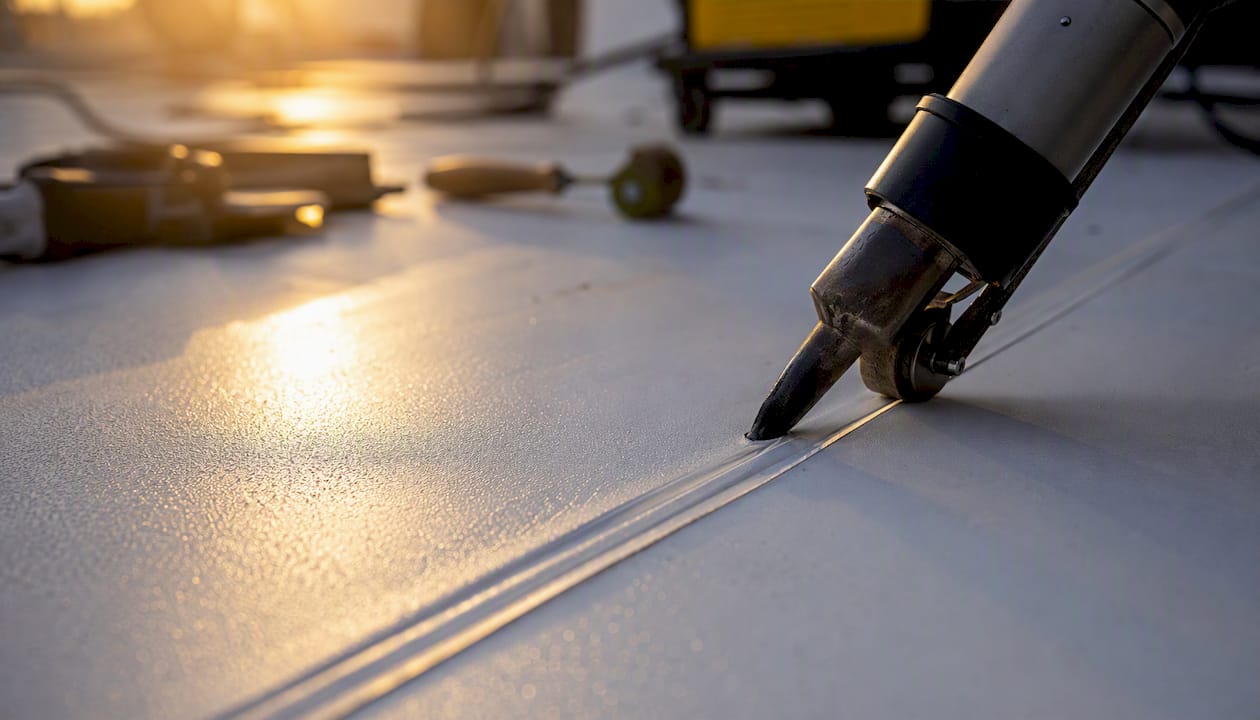
TPO (thermoplastic polyolefin) is a thermoplastic membrane, typically white or light grey, running 45 to 80 mil thick. Unlike EPDM’s rubber chemistry, TPO sheets fuse together with hot air, creating a continuous, welded seam rather than a bonded one.
That fusion is the headline advantage. Seam-related failures are a leading cause of warranty claims on single-ply roofs, and a properly welded TPO seam largely removes that failure mode. The reflective white surface also cuts rooftop surface temperatures, which lowers cooling-energy use in warm months. Reinforced TPO handles foot traffic and equipment servicing well, and it’s the default membrane on most new commercial builds today.
The catch: formulation quality varies by manufacturer, and earlier-generation TPO products showed heat-aging and weld-line issues in some climates. Repairs also require a hot-air welder and a technician who actually knows how to run one.
Pro Tip: If you’re specifying TPO on a Metro Vancouver commercial project, ask for the manufacturer’s heat-aging and weathering data in writing, confirm the welder operator holds current certification, and consider 80-mil membrane for rooftops with heavy HVAC or high-heat equipment.
A welded seam is only as good as the person running the welder. Formulation data on paper doesn’t matter if the field weld wasn’t tested with a probe on install day.
TPO vs EPDM: the technical differences that decide your choice
Seam technology is the biggest structural difference. TPO’s hot-air welded seams fuse the sheets into one continuous surface, while EPDM relies on adhesive or seam tape that can lose bond strength over decades, particularly at flashing details and penetrations.
Reflectivity is the second major fork in the decision. White TPO reduces surface temperature and can produce meaningful cooling-energy savings versus black EPDM, though the actual dollar savings depend heavily on your building’s insulation, HVAC load, and local climate. Standard black EPDM is available in white, but expect a cost premium.
Ponding water flips the advantage back toward EPDM. Its rubber composition tolerates standing water for extended periods without the surface degradation some TPO formulations show. If your roof has drainage dead zones, EPDM is the safer bet, or you need to fix the slope regardless of membrane choice.
On lifespan, EPDM’s field record includes installations exceeding 30 to 40 years when properly installed, since the membrane has been in commercial use since the 1960s. TPO is newer to the market and modern formulations typically run 20 to 30 years in field studies.
Before signing any warranty, verify:
- Whether coverage is No Dollar Limit (NDL) or material-only.
- The membrane thickness required to qualify for the top-tier warranty term.
- Whether ponding water voids the warranty outright.
- Which installation details (flashing, penetrations) are excluded from coverage.
Which membrane fits your building?
A single-storey warehouse in a hot climate with a large flat roof usually favours TPO. The reflectivity pays for itself over a large footprint, and there’s little ponding risk on a well-drained deck.
A multi-storey office with a small roof area often leans EPDM, since the energy savings from reflectivity matter less relative to total building load, and EPDM’s lower installed cost keeps the project on budget.
A restaurant or kitchen exhaust environment points toward TPO, thanks to better resistance to grease and oil contamination that would otherwise degrade rubber membrane faster.
A roof with heavy foot traffic or frequent rooftop equipment servicing does well with either, provided the membrane is reinforced and walkway pads protect high-traffic zones.
Pro Tip: Your expected hold period changes the math. If you’re planning to sell within 5 to 7 years, EPDM’s lower installed cost usually wins on straight payback. If you’re holding 20-plus years, TPO’s energy savings often close the cost gap and can overtake EPDM in total lifecycle spend.
The membrane that’s “better” depends entirely on how long you plan to own the building. There’s no universal winner, only a better fit for your timeline.
How to choose a roofing contractor: a checklist and cost guide
- Ask what seam method they use and request proof of hot-welder operator certification if it’s TPO.
- Request the manufacturer’s formulation and weathering data sheet, not just a sales brochure.
- Confirm membrane thickness (45 mil minimum for most commercial applications; 80 mil for high-heat rooftops).
- Ask whether the warranty is NDL or material-only, and what voids it.
- Confirm who handles permit applications under the BC Building Code.
Rough installed cost guidance, converted from documented USD ranges, runs about $7.50 to $12.25 CAD per square foot for TPO and $5.50 to $11.00 CAD per square foot for EPDM, depending on insulation thickness, attachment method, and exchange-rate timing. A typical line-item breakdown includes membrane and insulation, labour, flashing and detail work, and a warranty premium for extended NDL coverage.
| Cost component | Typical share of project |
|---|---|
| Membrane and insulation | 45% |
| Labour | 25% |
| Flashing, detail work, warranty premium | 15% |
Red flags to walk away from: vague warranty language, no proof of certified welders, a bid noticeably below local averages, missing flashing detail drawings, or a contractor who expects you to pull your own permit.
Installer credentials and warranty details worth verifying
Before signing, confirm the contractor is licensed in BC, carries current WCB clearance and liability insurance, and holds manufacturer-approved contractor status for the specific membrane brand. Ask for two or three local references from projects installed at least five years ago, since installation error, not membrane chemistry, causes most premature single-ply failures.
On warranty paperwork, get clear answers on what voids coverage, whether it’s NDL or material-only, the thickness required for 20, 25, or 30-year terms, and whether ponding water is excluded.
Pro Tip: A manufacturer-approved installer status matters more than a low bid. It means the manufacturer has actually inspected that crew’s welds before backing the warranty.
The warranty is only as strong as the installer standing behind the weld. Paper credentials mean nothing without a field track record you can call and check.
Multigroup is a licensed general contractor operating throughout Metro Vancouver, and manages permits, scheduling, and installation oversight on commercial roof replacement and tenant improvement projects from start to finish.
A contractor’s view from the field
On too many jobs, owners pick a membrane based on price alone and skip the formulation and welder-certification questions entirely. We check weld seams with a probe on install day, verify manufacturer approval paperwork before the crew mobilizes, and handle permit filing under the BC Building Code so nothing stalls mid-project.
Get a roof assessment before you commit to either membrane
There are legitimate coatings and single-ply specialists in the market, and firms like TrueSealCoating focus specifically on membrane systems and commercial coatings. If your project is part of a broader commercial renovation, tenant improvement, or warehouse upgrade in Metro Vancouver, Multigroup handles the roof alongside everything else on the building: permits, scheduling, and trade coordination under one contract.

Multigroup inspects the existing roof, specifies the right membrane for your building type and hold period, and manages the full installation and permit process. Ballpark installed costs run roughly $7.50 to $12.25 CAD per square foot for TPO and $5.50 to $11.00 CAD per square foot for EPDM, though final pricing depends on a site inspection and insulation requirements. Book a roof inspection with Multigroup and get a written quote before your next lease renewal or capital planning cycle.
Sources
- TPO vs EPDM Roofing: 2026 Commercial Comparison | The Roofing Brief
- TPO vs EPDM Roofing Compared | Flat Roof Report
- TPO vs EPDM Commercial Roofing: DFW Cost & Guide 2026 | JRH Construction
FAQ
Is TPO roofing better than EPDM?
TPO is generally the better choice for reflectivity and seam reliability, while EPDM often wins on cold-climate flexibility and long-term field track record. Neither is universally better; the right pick depends on your climate and hold period.
How do you tell if a roof is TPO or EPDM?
EPDM is almost always black rubber with a smooth, slightly stretchy feel, while TPO is typically white or light grey with a firmer, more plastic-like surface. Seams are the clearest tell: TPO shows a fused, welded seam line, while EPDM seams show a visible adhesive or tape strip.
What are the downsides of EPDM roofing?
EPDM’s adhesive or tape seams can degrade over time and become a long-term leak risk, and standard black EPDM absorbs heat rather than reflecting it. It also has weaker resistance to oils and greases than TPO.
Is EPDM more expensive than TPO?
No, EPDM typically installs for 10 to 25% less than TPO on an equivalent assembly, with EPDM running roughly $5.50 to $11.00 CAD per square foot compared to TPO’s $7.50 to $12.25 CAD per square foot.