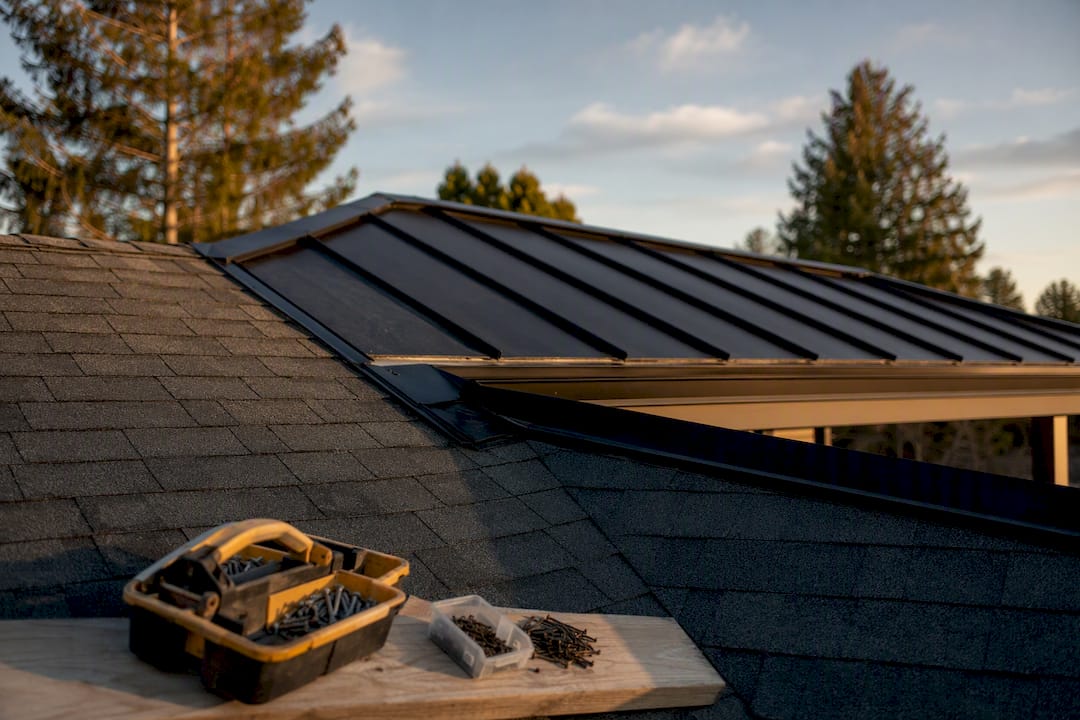
Metal roofs typically win on lifespan and total cost over 30 to 50 years; asphalt shingles typically win on upfront price and suit tighter budgets or complex roof geometry. If you’re staying in your home for decades, live somewhere with heavy snow, hail, or coastal wind, and want to install a roof once, metal is usually the better financial and practical call. If you’re renovating to sell within five to ten years, have a tight construction budget, or your roof has a lot of valleys and penetrations that would inflate metal labour costs, asphalt shingles remain a sound choice.
Two situations tend to favour shingles: short ownership horizons and irregular roof shapes where metal’s per-hour labour costs pile up fast. Two situations tend to favour metal: long-term ownership and exposure to hail, high winds, or heavy snow loads.
- Shingles fit: first-time buyers planning to sell within 10 years, budget-constrained renovations, roofs with complex dormers and valleys
- Metal fits: long-term owners, hail or high-wind zones, homeowners who want to skip a second re-roof in their lifetime
Asphalt shingles generally last around a couple of decades in Canadian conditions, while quality metal roofing can last multiple decades, according to Homeowner. The BC Building Code’s roofing provisions also set slope limits that affect which material is even permitted on certain roof designs, a detail worth confirming with Multigroup Contracting before you commit to either option.
Key Takeaways
Metal roofing costs more upfront but typically wins on lifespan, storm resistance, and 50-year total cost, while shingles remain the practical choice for tighter budgets and complex roof shapes.
| Point | Details |
|---|---|
| Lifespan gap is significant | Shingles last roughly 15 to 25 years; metal roofing commonly reaches 40 to 70 years. |
| Installed cost favours shingles upfront | Shingles generally cost less per square foot installed than metal roofing. |
| Lifecycle math favours metal long term | A single metal install often costs less over 50 years than two or three shingle replacements. |
| Hail and wind resistance differ sharply | Metal sustains cosmetic denting from hail; shingles can lose waterproofing capability. |
| Installation quality determines outcomes | Poor metal installation causes oil-canning and leaks, so vetting installer experience matters. |
| Multigroup manages the full process | Multigroup Contracting handles permits, inspections, and contractor coordination on roofing-linked renovation projects across Metro Vancouver. |
Table of Contents
- Metal roof vs asphalt shingles: a side-by-side look
- What does a metal roof cost compared to shingles in Canada?
- How do metal roofs and shingles hold up in bad weather?
- Why does metal roofing demand better installation skill?
- What questions should you ask before choosing a roof?
- Do metal roofs or shingles look better and hold value?
- How much upkeep does each roof type actually need?
- Which roof should you actually choose?
- What the roofing debate gets wrong
- How Multigroup Contracting supports your roofing project
- Sources
- FAQ
Metal roof vs asphalt shingles: a side-by-side look
The two materials trade advantages depending on what you’re optimizing for. Shingles almost always cost less to install, but that gap narrows and often reverses once you account for replacement cycles.
- Upfront vs lifecycle cost: Shingles cost less per square foot installed, but metal frequently costs less over 40 to 50 years because you avoid a second or third re-roof and its disposal fees.
- Lifespan in cold, wet climates: Shingles run 15 to 25 years; metal commonly reaches 40 to 70 years, though coastal salt exposure and repeated freeze-thaw cycles can shorten either material’s practical service life.
- Weather resistance: Metal sheds snow quickly and resists wind uplift better when properly engineered; shingles handle moderate wind fine but suffer more functional hail damage than metal, which mostly dents cosmetically.
- Maintenance and repairability: Shingles are cheaper and faster to spot-repair; metal needs fewer repairs overall but requires a specialist to fix fastener or seam issues correctly.
- Energy and environmental impact: Reflective metal finishes reduce cooling load in summer, an advantage industry data on asphalt versus reflective roofing acknowledges even while defending shingle economics; metal is also more recyclable at end of life.
- Resale and value: Metal roofs often recoup a strong share of their installed cost at resale in markets where buyers value durability; shingles remain the safer bet when matching a neighbourhood’s dominant style matters more than long-term economics.
Neither material is objectively “better” in a vacuum. The right choice depends on how long you’ll own the house, your local climate risk, and how complex your roofline is.
What does a metal roof cost compared to shingles in Canada?
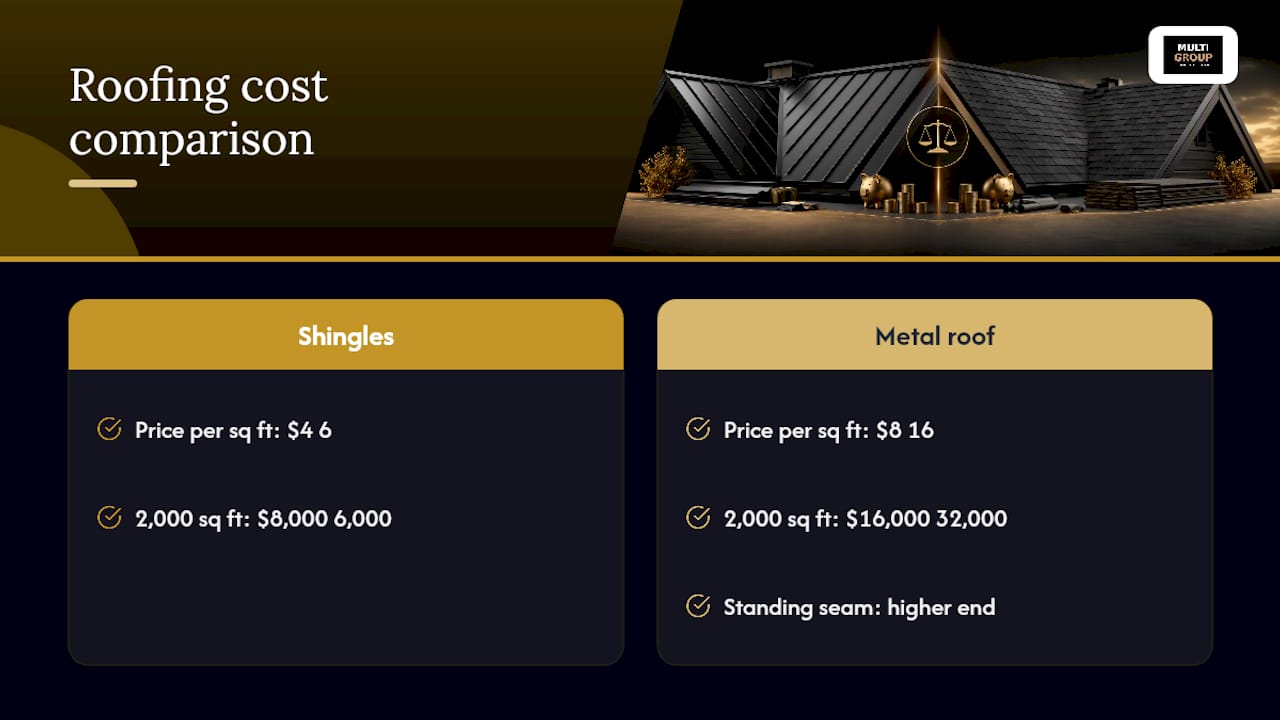
Regional pricing data puts asphalt shingles at roughly $4 to $9 per square foot installed, while metal roofing runs about $8 to $16 per square foot, with standing seam profiles landing at the top end, according to VR Metal Roofing’s 2026 Ontario cost comparison. On an average 2,000 square foot roof, shingles usually cost significantly less upfront than metal, before accounting for roof complexity, tear-off, or disposal.
The 50-year math is where the comparison flips. Here’s a simplified worked example:
- Shingles: Install once around year zero (roughly $8,000 to $18,000), then replace twice more by year 50 as each roof reaches 20 to 25 years, adding tear-off and disposal costs each time.
- Metal: Install once around year zero (roughly $16,000 to $32,000), and if it reaches even the low end of its 40 to 70 year lifespan, you may never need a second installation within that 50-year window.
Once you factor in labour and disposal for two or three shingle replacements, a single metal roof frequently costs less over 50 years than the cumulative price of repeated asphalt jobs.
Pro Tip: Ask your insurer whether a metal roof qualifies for a premium discount in your area. Some carriers reward impact and fire resistance, which can quietly offset part of the higher upfront cost.
Roof complexity moves both numbers. A roof with multiple valleys, dormers, and penetrations pushes metal labour costs up disproportionately compared to shingles, since cutting and flashing metal around irregular shapes takes far more skilled labour hours than scoring and fitting asphalt.
How do metal roofs and shingles hold up in bad weather?
Snow, ice, hail, and wind treat these two materials very differently, and your local exposure should weigh heavily in the decision.
Metal sheds snow quickly off its smooth, sloped surface, which reduces the freeze-thaw cycling that causes ice dams at the eaves. Shingles retain more snow and are more prone to ice dam formation, a risk the BC Building Code’s eave protection requirements specifically address through membrane underlayment rules.
Hail produces a very different outcome on each surface. Metal typically absorbs hail impact as cosmetic denting, while asphalt shingles can lose granules and crack, compromising their waterproofing. Regional contractor case reviews in hail-prone parts of the country report that metal roofs commonly retain their weatherproofing after storms that leave nearby shingle roofs needing repair or replacement.
- Wind uplift resistance is generally stronger on properly engineered standing seam metal systems than on standard three-tab shingles.
- Coastal salt exposure can accelerate corrosion on lower-grade metal panels, so finish quality matters near the ocean.
- Repeated freeze-thaw cycling shortens shingle lifespan faster than it affects metal, since asphalt is more prone to cracking as it contracts and expands.
For climate-specific risk, Environment and Climate Change Canada’s historical weather data is worth checking before you finalize a material, especially if you’re in a snow belt or hail corridor.
Why does metal roofing demand better installation skill?
Metal roofing punishes sloppy work in ways shingles rarely do. Metal panels expand and contract with temperature swings, so they need floating fastening systems, expansion clips, and properly detailed flashing, not the nail-and-overlap simplicity of asphalt.
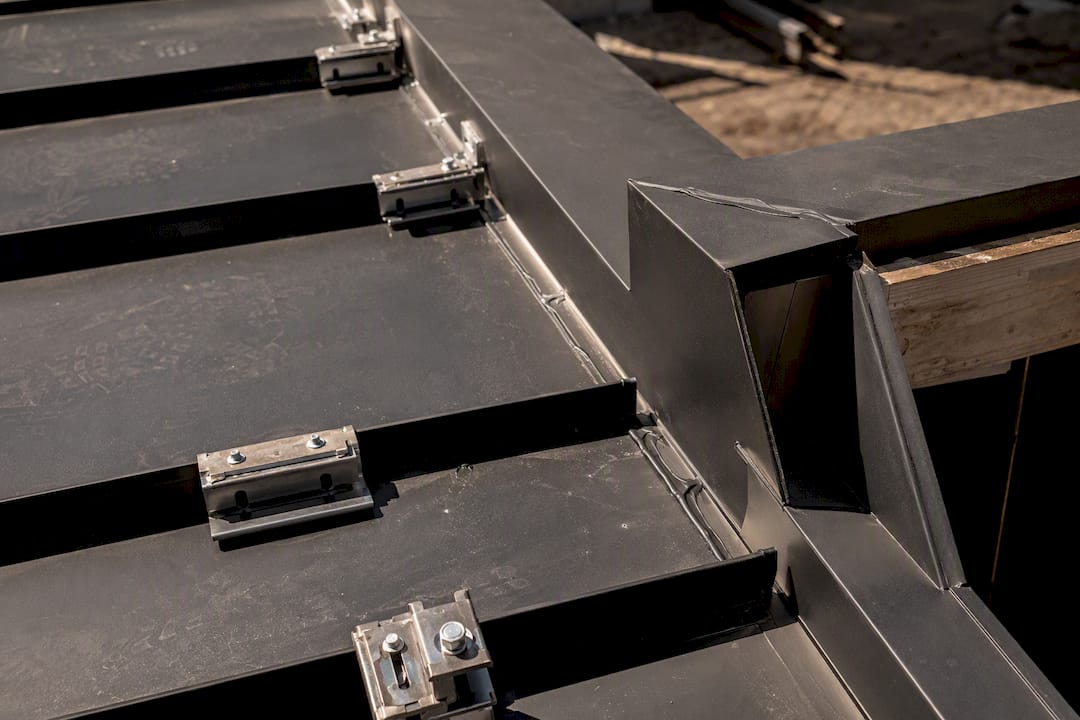
Poor installation shows up as oil-canning (visible waviness in flat panel areas), fasteners backing out over time, and leaks at seams and penetrations. Practitioner accounts of metal roofing installs consistently point to thermal movement mismanagement as the root cause of most callbacks.
Before hiring anyone for a metal re-roof, ask for:
- A valid BC contractor licence and proof of liability insurance
- References specifically from metal roofing projects, not general roofing work
- Written detail on fastener and clip type, and how they’ll manage thermal expansion
- A copy of the manufacturer’s warranty terms and the installer’s own workmanship warranty
- Confirmation they’ll pull the permit and handle inspections directly
Pro Tip: Ask any bidding contractor to name two properties they’ve re-roofed with metal in the past two years. Vague answers or a refusal to give addresses are a real warning sign.
Multigroup Contracting manages permitting, inspections, and contractor coordination on complex commercial and residential envelope projects across Metro Vancouver, which is the same discipline a metal re-roof demands.
What questions should you ask before choosing a roof?
Work through this checklist during quotes to keep contractors accountable and match the material to your actual situation, not just the lowest bid.
Lean toward metal if you:
- Plan to stay in the home 15+ years
- Live in a hail, high-wind, or heavy snow zone
- Want to minimize maintenance calls over the next few decades
Lean toward shingles if you:
- Expect to sell within 5 to 10 years
- Are working with a tighter renovation budget
- Have a roof with many valleys, dormers, or skylights that would push metal labour costs sharply higher
Ask every estimator these questions directly: What does the warranty actually cover, and for how long? What attachment method will they use, and why? How will they handle attic ventilation under the new roof? Who is responsible for pulling the permit? Are disposal and tear-off fees included in the quote?
Watch for these red flags in any bid: no mention of permit responsibility, warranty language that’s vague about coverage exclusions, or an inability to show proof of prior metal roofing installations when metal is being quoted.
Do metal roofs or shingles look better and hold value?
Modern metal roofing comes in standing seam, stone-coated steel, and profiles that mimic cedar shake or slate, so the “industrial look” stereotype no longer applies. Shingles still offer the widest range of colours and textures at the lowest cost, which matters if your neighbourhood has a strong architectural character to match.
- Premium metal roofing often recoups a strong share of its installed cost at resale, particularly in regions where buyers actively price in durability.
- Quality architectural asphalt shingles remain a safe, value-neutral choice in most resale markets.
- If your street is dominated by traditional shingle rooflines, matching that look can matter more to a buyer’s first impression than the lifecycle economics.
For residential builds where exterior material choices need to work together, it’s worth reviewing broader material selection considerations for custom homes alongside the roof decision.
How much upkeep does each roof type actually need?
Both materials need periodic attention, just on very different schedules and with different repair profiles.
- Shingles: Inspect annually for lifted or missing granules, cracked tabs, and moss buildup; typical repairs (patching a section, replacing flashing) are inexpensive and widely available from most roofing crews.
- Metal: Inspect annually for loose fasteners, sealant wear at penetrations, and any panel movement; repairs are less frequent but require a specialist familiar with the specific panel and clip system.
- End of life: Asphalt shingles are largely landfill-bound, while metal roofing is highly recyclable, which factors into the environmental comparison beyond just energy performance.
Which roof should you actually choose?
If you’re planning to own your home for 15 years or more, especially in a snow belt, hail corridor, or coastal wind zone, metal roofing is the stronger long-term investment despite the higher upfront cost. If your timeline is shorter, your budget is tight, or your roofline is architecturally complex, quality asphalt shingles remain a practical, defensible choice.
Whichever direction you lean, get two to three detailed quotes, confirm in writing who handles the permit, and verify both the manufacturer’s material warranty and the installer’s workmanship warranty before signing anything.
What the roofing debate gets wrong
Most “metal vs shingles” content treats this as a pure durability contest, and that framing misses what actually determines whether a homeowner is happy five years in: installation quality. A mediocre metal roof installed by someone without documented experience with clips and thermal expansion will underperform a well-installed shingle roof every time. The material spec sheet matters less than most guides suggest; the installer’s track record matters more.
The conventional advice also underweights roof geometry. A steeply valleyed, dormer-heavy roof can erase most of metal’s lifecycle advantage because labour hours, not materials, drive the cost gap on complex shapes. Anyone quoting a flat 40 percent premium for metal without first walking your roof and counting valleys is giving you a number, not an estimate.
If there’s one thing to prioritize first, it’s this: ask harder questions about permits and installer experience before you ask about panel colour. The material choice matters. The hands doing the work matter more.
How Multigroup Contracting supports your roofing project
Multigroup Contracting gives Metro Vancouver homeowners something most roofing quotes skip entirely: a general contractor who manages the permit, the inspections, and the trade coordination as one accountable process, rather than leaving you to chase down a separate permit runner or hope your installer knows the BC Building Code’s slope and eave protection rules by heart.

That matters most on projects where the roof isn’t standing alone. If your re-roof is happening alongside a larger renovation, whether that’s a full commercial renovation or a residential project with structural or envelope changes, Multigroup coordinates permitting, scheduling, and code compliance across every trade involved, not just the roofing crew. We provide CAD pricing estimates upfront and confirm BC Building Code compliance before work begins, so there are no surprises mid-project. If your renovation touches more than the roof, request a site visit or estimate and we’ll walk you through what permit handling and project management actually look like on your specific property.
Sources
- Environment and Climate Change Canada — Weather and climate
- BC Building Code — Section 9.26 Roofing (Division B — Part 9)
- Homeowner
- VR Metal Roofing — Metal roofing vs asphalt shingles: cost for Ontario in 2026
FAQ
What is the biggest problem with metal roofs?
The biggest risk is poor installation, since improperly managed thermal expansion causes oil-canning, backing-out fasteners, and leaks at seams. Choosing an installer with documented metal roofing experience largely eliminates this risk.
What are the disadvantages of a metal roof?
Metal costs more upfront, roughly $8 to $16 per square foot installed versus $4 to $9 for shingles, and requires a specialist installer familiar with clips, fasteners, and flashing details. It can also be noisier during heavy rain or hail unless properly insulated and underlaid.
Is it better to have a metal roof or shingles?
Metal is generally better for long-term owners in hail, wind, or heavy snow zones because of its longer lifespan and stronger storm performance. Shingles are usually better for shorter ownership horizons, tighter budgets, or roofs with complex geometry.
What is the average cost of a metal roof compared to shingles in Canada?
Regional data puts installed shingle costs around $4 to $9 per square foot and metal around $8 to $16 per square foot, with standing seam profiles at the higher end. On a typical 2,000 square foot roof, that’s roughly $8,000 to $18,000 for shingles versus $16,000 to $32,000 for metal.
Are metal roofs louder than shingle roofs during storms?
Metal can transmit more sound during heavy rain or hail than shingles, but proper solid decking, underlayment, and insulation substantially reduce the noise difference in most homes.