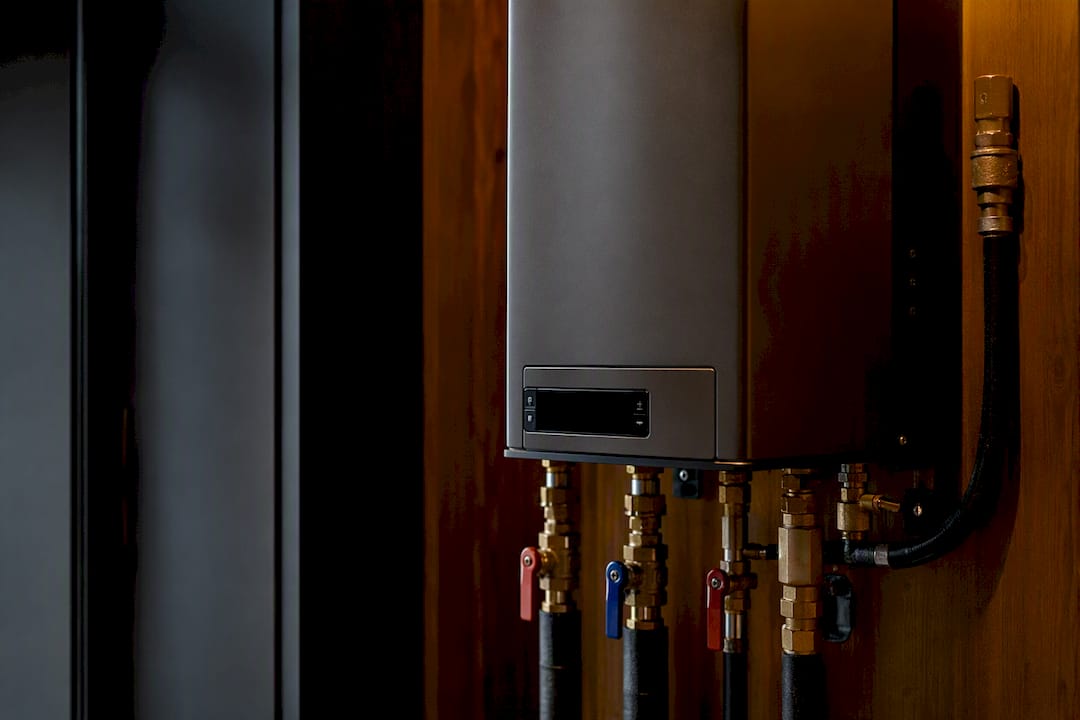
For most single-family homes with steady, predictable hot-water use, a tankless system pays off in space and long-term efficiency. For rental units, large families with heavy simultaneous demand, or anyone who wants the lowest upfront cost, a conventional tank still makes more practical sense. The deciding factors are your hot-water demand pattern, how complex the installation will be, and whether you’re optimizing for upfront cost or long-term operating savings.
Three facts worth holding onto before you talk to a contractor:
- ENERGY STAR certified tankless units can use about 30% less energy than standard storage tanks, according to Natural Resources Canada, though real savings depend on your household’s usage pattern.
- Tankless systems commonly last 15 to 20-plus years against 10 to 15 years for tanks, per industry data.
- Converting to tankless often triggers permit and code requirements that a straight tank swap avoids.
Key Takeaways
The right water heater choice depends on matching your household’s actual demand pattern to each system’s sizing, installation scope, and ownership horizon rather than defaulting to whichever one sounds more efficient.
| Point | Details |
|---|---|
| Efficiency depends on usage pattern | ENERGY STAR tankless units use about 30% less energy than tanks, but only when usage is spread out rather than bunched together. |
| Installation scope drives cost | Venting, gas-line upsizing, and electrical work push tankless conversions 30 to 40% above a straight tank swap. |
| Lifespan gap favours tankless | Tankless units commonly last 15 to 20-plus years against 10 to 15 years for tanks, with proper maintenance. |
| Size before you buy | Convert tankless flow rate (gpm times 60) against tank FHR so you’re comparing systems on equal terms. |
| Get a site-specific scope | Multigroup handles the permit, trade coordination, and inspection work for tank swaps and tankless conversions across Metro Vancouver. |
Table of Contents
- Tankless vs tank water heater: pros and cons at a glance
- What do tank and tankless water heaters cost, installed?
- How do you size a tank or tankless system correctly?
- Installation complexity: what makes tankless harder to install
- How long do tank and tankless water heaters last?
- Which system fits your property: a decision checklist
- How Multigroup scopes water heater projects in Metro Vancouver
- What is the environmental impact of each system?
- Does climate or cold water supply change performance?
- How does water quality affect your choice?
- How fast do tanks and tankless units deliver hot water?
- What’s the day-to-day experience like with each system?
- Can these systems connect to renewable energy or smart home setups?
- What the data actually tells you to prioritize
- Get your water heater project scoped by Multigroup
- Sources
- FAQ
Tankless vs tank water heater: pros and cons at a glance
Every property owner asks the same question eventually: which system actually fits my building? The honest answer depends on how you weigh six factors: space, energy use, upfront cost, recovery speed, maintenance, and lifespan.
Tank water heaters keep hot water ready in a 40 to 60-gallon reservoir. They cost less to buy, install faster, and almost any licensed plumber can service one. The tradeoff is standby heat loss (the tank keeps reheating water even when nobody’s using it), a bigger footprint, and a shorter service life.
Tankless water heaters heat water on demand, so there’s no tank to lose heat between uses. NRCan’s data shows ENERGY STAR tankless models can use roughly 30% less energy than storage tanks by eliminating that standby loss. They also take up far less wall space, a real advantage in condos and tight mechanical rooms.
Quick comparison:
- Space: Tankless wins, mounts on a wall, frees up floor area.
- Energy use: Tankless typically wins when usage is spread through the day rather than one long shower marathon.
- Upfront cost: Tank wins, lower purchase and installation price.
- Recovery/flow: Tank offers a fixed hot-water reserve; tankless offers continuous flow within its rated capacity.
- Maintenance: Tank needs simpler annual checks; tankless needs scale control, especially with hard water.
- Lifespan: Tankless generally outlasts tank by 5 to 10 years with proper upkeep.
Some utilities and manufacturers offer rebates on high-efficiency tankless units, so check local programs before assuming the price gap is fixed.
What do tank and tankless water heaters cost, installed?
A straight tank-to-tank replacement in a home with an existing gas line and vent typically runs less than a full tankless conversion, largely because there’s no new venting or gas-line work involved. A tank-to-tankless conversion carries a real upfront premium. Industry estimates put that premium at roughly 30 to 40% higher than a comparable tank installation, mostly because of the site work required. These figures are ballpark and site-dependent. Always confirm with an in-person assessment before budgeting.
Three things drive that premium more than anything else:
- Venting changes. Tankless units often need dedicated venting that a tank never required.
- Gas-line upsizing. NRCan notes a gas-fired tankless unit may need a 3/4-inch supply line where a standard tank ran fine on 1/2-inch.
- Electrical panel upgrades and permits. Add labour and inspection time on top of the equipment cost itself.
Pro Tip: Run a simple payback calculation before you commit. Take the extra upfront cost of tankless over tank, divide it by your estimated annual energy savings (using NRCan’s efficiency range adjusted for your actual household usage), and you’ll get a rough number of years to break even. Households with heavy, spread-out hot-water use often break even faster than those with light or bunched-up demand.
How do you size a tank or tankless system correctly?
Tanks and tankless units aren’t rated the same way, which trips up a lot of buyers. Tanks use first-hour rating (FHR), the amount of hot water they can deliver in a single hour starting full. Tankless units are rated by continuous flow, expressed in litres per minute or gallons per minute (gpm). NRCan’s guide explains you can roughly convert flow to FHR by multiplying gpm by 60, making the two ratings comparable.
To size correctly:
- List every fixture that might run hot water at once (shower, dishwasher, washing machine).
- Estimate concurrent use during your household’s peak hour, not average use.
- Add a safety margin of 15 to 20% above that peak for comfort and future demand.
- Match the total to a tank’s FHR or a tankless unit’s flow rating using the conversion above.
Here’s where a lot of homeowners get caught: most electric on-demand units can’t supply an entire house on their own, which is why gas-fired tankless dominates whole-house installs in Canada. Large homes or buildings with heavy simultaneous demand often need multiple tankless units working together, or a hybrid setup, rather than one unit doing everything.
Installation complexity: what makes tankless harder to install
A tank swap is usually the simpler job: same footprint, same venting, same gas or electrical connection, done in a day. Tankless conversions ask more of your building.
- Venting and combustion-air clearance often need to change to meet the new unit’s specifications.
- Gas-line sizing may need upsizing, as noted above, adding both material and labour cost.
- Electrical service upgrades are sometimes required, particularly for hybrid or electric tankless setups.
- Permits and inspections apply to most water heater installations in Metro Vancouver under the BC Building Code, and tankless conversions typically trigger more scope for inspectors to review than a straight tank replacement.
- Licensed trades (plumbing, gas fitting, and electrical where relevant) need to coordinate on-site, which affects your project timeline as much as your budget.
These factors compound. A conversion that looks straightforward on paper can add days to a timeline once venting and gas-line work enter the picture.
How long do tank and tankless water heaters last?
Storage tanks typically last 10 to 15 years. Tankless units commonly last 15 to 20-plus years when properly maintained, according to manufacturer and industry data. That gap matters more than it looks on paper, especially for property managers planning replacement cycles across a portfolio.
Maintenance differs by system:
- Tanks need periodic flushing to clear sediment and anode-rod replacement roughly every few years to prevent corrosion.
- Tankless units need scale control and heat-exchanger servicing, particularly where water hardness is a factor.
- Rental and multiunit properties benefit from redundancy planning, easy mechanical-room access, and a service contract that catches small issues before they become emergency calls.
Pro Tip: If you manage more than one rental unit, standardize on one system type across your portfolio where possible. It simplifies parts inventory, trains your maintenance staff on one set of failure modes, and makes budgeting for replacement cycles far more predictable.
Which system fits your property: a decision checklist
Before you call a contractor, work through this checklist:
- Measure your peak hot-water demand using the fixture-count method above.
- Inspect your mechanical space and existing venting to see what a tankless conversion would actually require.
- Estimate installation cost including any gas-line, electrical, or venting upgrades.
- Check for rebates through your utility or ENERGY STAR retailers before finalizing a budget.
- Decide your ownership horizon. A longer hold favours tankless; a shorter one often favours tank.
Three quick scenarios:
- Single-family home, moderate use: Tankless usually wins on space and long-term efficiency if the gas line and venting can be adapted affordably.
- Large family, high simultaneous demand: A high-FHR tank or a multi-unit tankless setup handles peak load better than a single standard tankless unit.
- Rental or multiunit property: Many landlords stick with tanks for the lower replacement friction and predictable operational simplicity, especially on shorter ownership horizons.
Before calling a contractor, have your current tank size, fuel type, main gas pipe size, and electrical panel capacity ready. It saves a site visit’s worth of back-and-forth.
How Multigroup scopes water heater projects in Metro Vancouver
MultigroupTeam manages water heater projects the same way it manages any tenant improvement or renovation: permits pulled up front, licensed trades coordinated on a set schedule, and every phase documented for the client.
Typical scope for a straight tank swap includes plumbing disconnection and reconnection, disposal of the old unit, and a final inspection. A tank-to-tankless conversion adds venting work, potential gas-line upsizing, electrical coordination where needed, and code-compliance sign-off under the BC Building Code.
- Site assessment and existing-system inspection
- Permit application and inspection scheduling
- Trade coordination (plumbing, gas fitting, electrical)
- Final CAD estimate confirmed after a site visit, since venting and gas-line work varies by roughly 30 to 40% in added installation cost between a simple tank swap and a full tankless conversion
What is the environmental impact of each system?
Standby heat loss is the environmental cost most people overlook with tanks. A storage tank keeps a large volume of water hot around the clock, which means it’s drawing energy even when nobody in the building is running a tap. Tankless units heat water only on demand, cutting that idle energy draw and contributing to the roughly 30% efficiency gap NRCan reports for ENERGY STAR models.
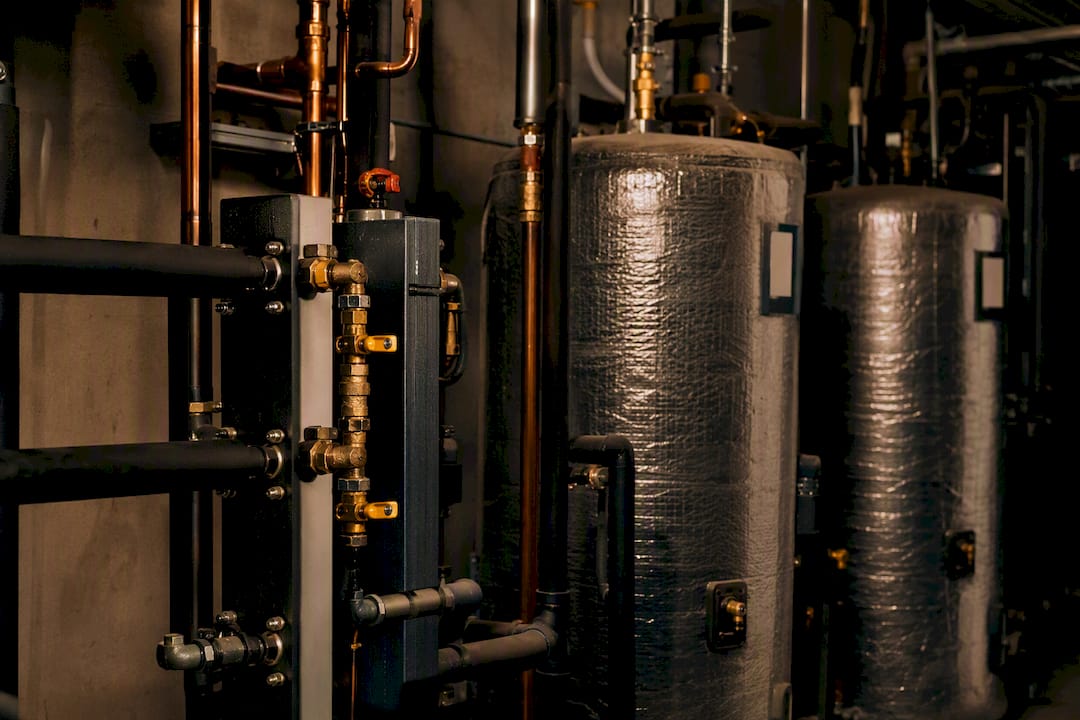
Resource use extends past energy, though. Manufacturing a tankless unit typically uses less raw material than a 40 to 60-gallon steel tank, and because tankless units last longer, fewer units end up in landfill over a building’s lifetime. A tank replaced every 10 to 15 years versus a tankless unit lasting 15 to 20-plus years means roughly one fewer disposal-and-replacement cycle per unit over a 30-year span.
Water usage matters too, particularly for showers and taps that run before hot water arrives. Faster-recovering systems, whether a well-sized tank or a properly sized tankless unit, waste less water down the drain while a household waits for temperature to climb. For a landlord managing several units, that adds up across a building over a year.
None of this makes tank systems environmentally reckless. A well-maintained tank, properly insulated with a modern jacket, closes some of the standby-loss gap. But for property owners weighing sustainability alongside cost, tankless generally offers the cleaner profile over the equipment’s full working life, assuming the household’s usage pattern actually benefits from on-demand heating rather than fighting against a heavy simultaneous-draw situation.
Does climate or cold water supply change performance?
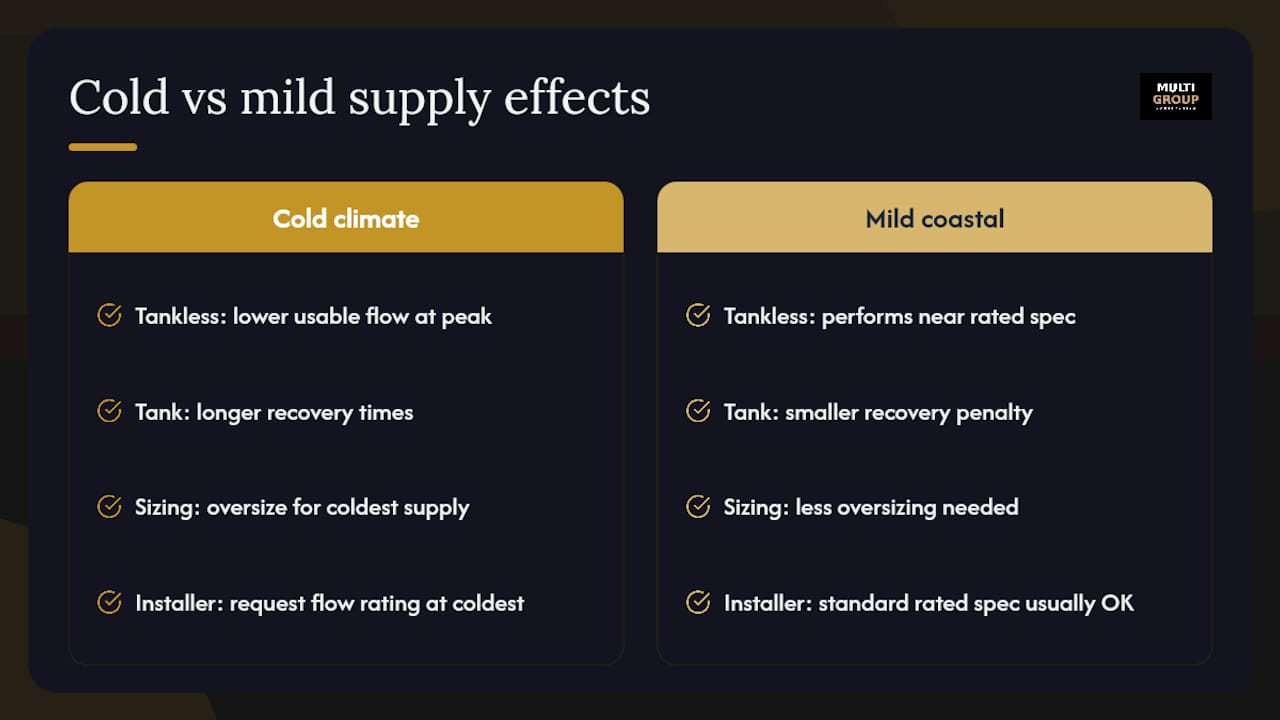
Incoming water temperature has a bigger effect on tankless performance than most buyers expect. A tankless unit has to raise cold groundwater to a usable temperature in real time, and the colder that incoming water is, the harder the unit works and the lower its effective flow rate becomes at a given temperature rise.
In regions where groundwater runs cold through winter, a tankless unit rated for a strong flow rate in milder conditions may deliver noticeably less usable hot water at peak demand once the ground cools. This isn’t a flaw exclusive to tankless. Tanks also take longer to recover when incoming water is colder, since the burner or element has more temperature rise to achieve before the tank reaches its set point again.
The practical fix for tankless in colder climates is sizing generously from the start, factoring in your coldest expected supply temperature rather than an average. A unit sized tightly for summer performance will disappoint every winter. Property managers overseeing buildings in colder regions should ask installers specifically about the unit’s flow rating at the coldest realistic incoming-water temperature for the area, not just its headline spec.
Milder coastal climates face less of this penalty since groundwater temperature swings less dramatically through the year, which is one reason tankless systems tend to perform closer to their rated spec in those regions without oversizing.
How does water quality affect your choice?
Hard water changes the math on both system types, but it hits tankless units harder. Mineral buildup, mainly calcium and magnesium, accumulates inside a tankless unit’s heat exchanger over time, narrowing the passages the water flows through and forcing the unit to work harder to hit its target temperature. Left unaddressed, scale buildup shortens the unit’s effective lifespan and can trigger error codes or reduced flow.
Tanks aren’t immune. Sediment settles at the bottom of a storage tank in hard-water areas, which is exactly why periodic flushing matters, but a tank’s simpler design tolerates some scale buildup longer before performance suffers noticeably.
If your property sits on a municipal supply with known hardness, or on well water, a whole-house water softener or a scale-inhibiting filter ahead of a tankless unit is worth budgeting into the installation cost. It’s a smaller add-on than most people assume relative to the conversion cost overall, and it protects the heat exchanger that makes up a large share of the unit’s replacement cost if it fails early.
Impurities beyond hardness, like sediment or high mineral content from well sources, also argue for a pre-filter regardless of which system you choose. It protects your investment either way and reduces how often a technician needs to service the unit.
How fast do tanks and tankless units deliver hot water?
Recovery time works differently for each system, and mixing up the two is a common buyer mistake. A tank has a fixed reserve, defined by its FHR, and once that reserve runs out mid-shower, you’re waiting for the tank to reheat before more hot water is available. Recovery time on a standard gas tank typically runs 20 to 40 minutes to fully reheat; electric tanks often take longer.
A tankless unit doesn’t have a reserve to run out, so there’s no “recovery” in the same sense. Instead, its limit is flow rate: as long as demand stays within its rated gpm or L/min at your incoming water temperature, hot water keeps coming indefinitely. Exceed that rate, running two showers and a dishwasher simultaneously beyond the unit’s capacity, and water temperature drops rather than running out entirely.
The practical difference shows up most in large households or short-term rental turnovers. A tank family that runs out of hot water waits for a recovery cycle. A tankless household that exceeds flow capacity gets lukewarm water immediately, which many people find more noticeable, though it resolves the moment demand drops rather than requiring a wait.
Delivery time to the tap is a separate issue from recovery. Both systems face a delay getting hot water to a distant fixture if there’s a long pipe run, since the water sitting in the pipe has to clear first. This is a plumbing-layout issue more than a heater-type issue, though tankless units sometimes have a brief ignition delay of a few seconds before hot water starts flowing, which some homeowners notice on first use.
What’s the day-to-day experience like with each system?
Noise is one of the most underdiscussed differences between the two. A tank runs almost silently apart from an occasional burner ignition or the faint sound of the tank refilling. Tankless units, particularly gas-fired models, produce an audible hum or fan noise while running, which is worth considering if the unit sits near a bedroom, home office, or shared rental wall.
Temperature consistency also differs. A well-sized tankless unit holds a remarkably steady output temperature throughout a shower because it’s actively modulating the burner to match flow, rather than drawing down a finite hot reserve that gradually cools. Tanks can drift slightly in temperature as the reserve depletes, particularly toward the bottom of the tank’s capacity.
For multi-fixture households, tankless avoids the classic “someone flushed the toilet and the shower went cold” complaint tied to pressure-balancing issues, though that’s more a plumbing-design factor than a heater-type factor on its own.
Property managers fielding tenant complaints should weigh noise against consistency directly. A tenant running a tankless unit gets steadier temperature but may notice operating sound through shared walls; a tenant on a tank gets quieter operation but risks running out of hot water during heavy use, like back-to-back showers before work.
Can these systems connect to renewable energy or smart home setups?
Both tank and tankless systems increasingly integrate with smart home platforms, letting owners monitor temperature, usage, and error codes remotely, which matters for property managers overseeing units they don’t visit daily. Some tankless models now ship with smart controllers or app connectivity as standard, giving a maintenance team an early warning before a scale-related error turns into a no-hot-water service call.
On the renewable side, solar thermal and heat-pump water heaters represent a different category from either standard tank or standard tankless gas units, but hybrid approaches exist. A well-insulated storage tank pairs naturally with solar preheating, since the tank can hold water that’s already partially heated by a solar loop before the burner or element tops it off. Tankless units are less commonly paired with solar preheating directly, though some commercial and multi-unit setups use tankless as a backup or booster behind a renewable primary system.
For property owners exploring a broader energy-management upgrade alongside their water heater decision, it’s worth looking at building-level controls rather than the heater in isolation. Partners like PODTECH’s smart building solutions work at that broader level, coordinating heating, cooling, and hot-water systems under one energy-management approach rather than treating the water heater as a standalone decision.
What the data actually tells you to prioritize
The conventional advice on this topic tends to flatten a genuinely situational decision into a blanket recommendation: “tankless is more efficient, so buy tankless.” NRCan’s own 30% efficiency figure comes with a real qualifier that most articles skip past: it depends on your household’s usage pattern. A property with light, spread-out demand sees a meaningful gap. A property with heavy, simultaneous demand across multiple bathrooms sees that gap shrink, and sometimes disappear, once you account for the multiple units or hybrid setup needed to match capacity.
What gets underweighted almost everywhere is installation scope. It’s about venting, gas-line sizing, and electrical work that varies wildly from one property to the next. Two identical homes on the same street can face very different conversion costs depending on how their existing systems are configured.
If there’s one thing worth prioritizing first, it’s an honest site assessment before falling in love with either system on paper. The right answer is genuinely property-specific, and that’s exactly the kind of judgment call a proper scoping visit resolves faster than another spec sheet.
— MultigroupTeam
Get your water heater project scoped by Multigroup
Multigroup is the practical alternative to guessing at a water heater decision from a spec sheet. As a licensed general contractor working across Metro Vancouver, including Burnaby, Surrey, Coquitlam, North Vancouver, West Vancouver, New Westminster, Langley, and Delta, Multigroup handles the site assessment, permit application, and trade coordination that actually determine whether tankless makes sense for your specific building, not a generic one.

A water heater project rarely stands alone. It often surfaces during a bigger tenant improvement, retail buildout, or office renovation where mechanical systems need updating alongside the space itself. Multigroup’s project management covers BC Building Code compliance, inspection scheduling, and licensed trade coordination from day one, so property managers and business owners aren’t juggling separate contractors for plumbing, gas fitting, and electrical work.
If you’re planning a broader upgrade, a commercial renovation or a tenant improvement project, reach out through multigroup.ca to schedule a site visit and get a real CAD estimate for your building rather than a rough guess based on averages.
Sources
- ENERGY STAR certified tankless water heaters — Natural Resources Canada
- Guide to residential water heaters — Natural Resources Canada
- 12 things to know about tankless water heaters for multi-family housing — Navien
FAQ
Which water heater is better, tank or tankless?
Neither is universally better. Tankless usually wins on efficiency and lifespan for spread-out demand patterns, while tanks win on upfront cost and simplicity for high simultaneous demand or short ownership horizons.
What are the downsides to a tankless water heater?
Higher upfront installation cost, sensitivity to hard water scale buildup, flow-rate limits during heavy simultaneous use, and often more complex permit and venting requirements than a tank swap.
Why might someone avoid a tankless water heater?
Owners with short ownership horizons, rental properties needing low replacement friction, or homes with heavy simultaneous hot-water demand often find a tank simpler and more predictable to operate.
Can a tankless water heater replace a 50-gallon tank?
Yes, if it’s sized correctly. Convert the tankless unit’s flow rate to an equivalent first-hour rating using NRCan’s gpm-times-60 method, and confirm the gas line or electrical service can support the unit’s demand.
How do I get an accurate installation cost estimate?
Because venting, gas-line, and electrical work vary significantly by property, an accurate CAD estimate requires an in-person site visit rather than a general online quote. Multigroup provides site assessments across Metro Vancouver for exactly this reason.