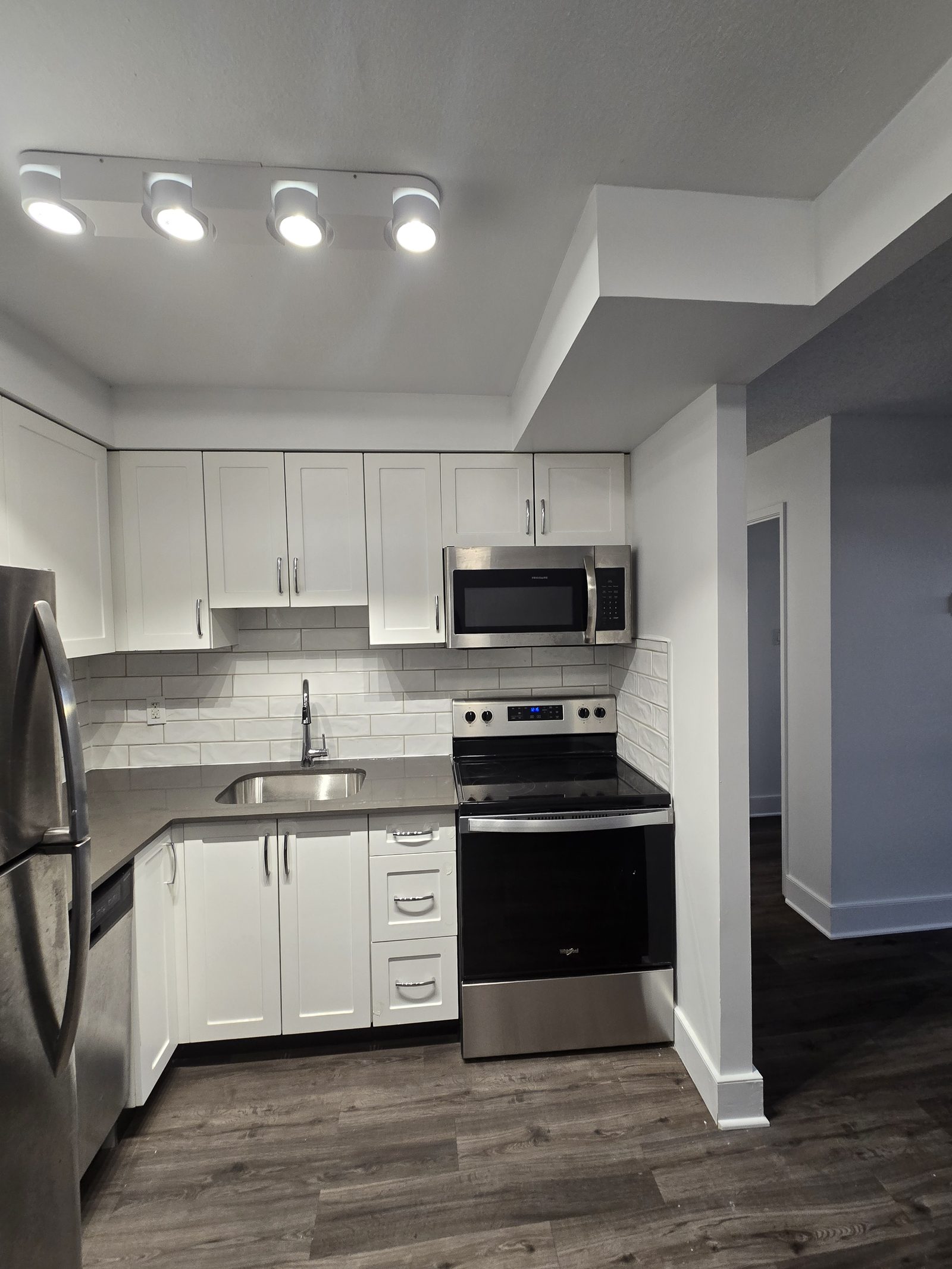
A capital project in a rental or strata building goes smoothly when the line in the capital plan becomes three things before anyone votes or signs: a scope checked on site, a price the council or rental owner can approve, and a phasing plan that keeps the building working while residents stay in it. This guide walks property managers, strata councils and rental owners in Metro Vancouver through each step, from the depreciation report to close-out.
TL;DR
- A capital project is work that renews or replaces part of a building, usually less often than once a year: common areas, corridors, lobbies, amenity rooms, suite renovations across a building, and accessibility upgrades.
- A depreciation report says what is coming and roughly when. It is not a construction scope. A contractor still needs to walk the building and confirm actual conditions before pricing.
- In a B.C. strata, spending from the contingency reserve fund on repairs or replacement recommended in the depreciation report can be approved by a majority vote. Most other contingency reserve fund spending needs a 3/4 vote.
- In rental buildings, the Residential Tenancy Act requires at least 24 hours' written notice before entering a suite, for entry between 8 a.m. and 9 p.m.
- In buildings from before 1990, a hazardous materials survey should come before demolition.
- Ask for a proposal with condition photos, a written scope, a lump-sum price, optional items on separate lines, a phasing plan and the close-out deliverables.
What counts as a capital project in a rental or strata building?
A capital project is renewal or replacement work that doesn't happen every year and is usually funded from a reserve or a capital budget rather than day-to-day operating money. In multi-family buildings in Metro Vancouver, the most common interior capital projects are:
- Corridor and lobby renovations: flooring, wall finishes, ceilings, lighting, doors and signage.
- Amenity and common-area upgrades: lounges, gyms, meeting rooms, mail and parcel rooms, and laundry rooms.
- Suite renovations at building scale: the same kitchen, bath and flooring specification repeated suite by suite, often as each suite comes vacant. See multi-family suite renovations.
- Accessibility and code upgrades: entry approaches, door hardware, handrails, signage and common-area washroom fixtures.
In a strata, the B.C. government describes the contingency reserve fund as the fund for expenses that occur less often than once a year or that don't usually occur.
Why does a depreciation report or capital plan need a site visit before pricing?
A depreciation report projects what will need repair or replacement over the coming decades and roughly what it may cost. It isn't a construction scope for this building, this year.
Since July 1, 2024, B.C. strata corporations with five or more lots must get a depreciation report on a five-year cycle, and they can no longer defer it with a 3/4 vote.
Before pricing a report item, a contractor should walk the space with the manager or a council member to:
- confirm the actual condition and age of finishes and services
- measure and photograph what will be removed and replaced
- note access limits such as elevator bookings, loading, parking and storage
- flag anything that needs a hazardous materials survey before demolition.
The last point matters in older buildings. WorkSafeBC says asbestos was used in building materials such as drywall, textured ceilings and vinyl flooring until the early 1990s, and buildings from before 1990 likely contain some. WorkSafeBC requires a qualified person to identify hazardous materials before renovation work that could disturb them. Our guide to avoiding asbestos abatement delays covers how to plan for this.
What should a capital project proposal include so a council or rental owner can approve it?
A proposal is ready for approval when someone who didn't walk the building can read it and understand what will be done, what it costs and how it will affect residents. Ask for:
- Condition photos of the areas in scope.
- A written scope tied to drawings or a finish schedule, not a one-line description.
- A lump-sum price for the base scope.
- A contingency that reflects the building's age, shown as a separate line.
- Optional items as separate lines, so the council or rental owner can add or drop them without repricing the whole job.
- Phasing and schedule assumptions, including work hours, elevator use and which areas close when.
- A permit list stating which permits are expected and who applies for them.
- A change process, so hidden conditions are reported and priced before any extra work starts.
- Close-out deliverables: deficiency walk, warranties, maintenance guidance and as-built information.
Our guides to construction contingency and how to review contractor bids go further on comparing proposals line by line.
Which approvals come first: the strata vote or the building permit?
Both run at the same time, and the slower one sets the start date. Most capital projects follow two approval paths.
The governance path.
- Stratas.
- Spending from the contingency reserve fund on repair, maintenance or replacement recommended in the depreciation report can be approved by a majority vote of owners.
- Most other contingency reserve fund spending needs a 3/4 vote, except emergencies.
- Under section 71 of the Strata Property Act, a significant change in the use or appearance of common property also needs a 3/4 vote at a general meeting, unless immediate change is necessary for safety or to prevent significant loss or damage.
- A corridor redesign can therefore need a different vote from a like-for-like replacement. Confirm the vote with your strata manager or lawyer.
- Rental buildings. The project goes through the rental owner's internal capital approval.
The municipal path. In Vancouver, painting and replacing flooring, cabinets or fixtures generally don't need a permit. Moving walls or plumbing, electrical or gas lines, structural repairs, and drywall repairs to fire separations in multi-unit residential buildings do. Other Metro Vancouver municipalities set their own rules, so confirm with the local building department.
Book the meeting date and the permit application together. A project approved at an AGM can still wait on a permit, and a permit in hand can still wait for the vote. Our post on strata hallway renovations shows how this plays out on a corridor project.
How is the work run with residents or tenants in the building?
Run it so residents can keep using the building every day, and so the manager isn't the one answering site questions. In practice, that means:
- A notice schedule agreed in advance.
- Stratas: the Standard Bylaws, unless a strata has replaced them, require 48 hours' written notice to enter a strata lot for repairs to common property, except in an emergency.
- Rental buildings: section 29 of the Residential Tenancy Act requires at least 24 hours' written notice for entry between 8 a.m. and 9 p.m., unless the tenant agrees otherwise.
- Phasing floor by floor or area by area, with posted signage and dates.
- Dust and floor protection, with hoarding where needed and daily cleanup.
- Exits kept clear and signed at all times, with no tools or materials left in corridors overnight.
- Work hours within the noise bylaw. In the City of Vancouver, construction noise on private property is allowed 7:30 a.m. to 8 p.m. on weekdays and 10 a.m. to 8 p.m. on Saturdays, and not on Sundays or holidays. Many buildings set tighter hours.
- Service shutdowns for water, power or elevators, scheduled with the manager and announced to residents ahead of time.
- One point of contact on the contractor's side for resident questions.
For rental buildings, disruption has a tenancy cost as well as a scheduling one. Residential Tenancy Policy Guideline 6 says a tenant may be entitled to compensation for loss of quiet enjoyment, even if the landlord made reasonable efforts to minimize disruption during repairs or renovations. See also renovating an occupied building.
Who is responsible for site safety on a capital project?
When workers from more than one employer are on site, there should be a written agreement naming the prime contractor. If there is no written agreement, WorkSafeBC considers the owner to be the prime contractor. Strata corporations and rental owners can take on that responsibility without realizing it when several trades are booked separately. Hiring one general contractor who agrees in writing to act as prime contractor keeps site coordination with the contractor. Read more in prime contractor responsibilities under WorkSafeBC.
What should you get at close-out?
You should get a finished space and records that make the next project easier:
- a joint deficiency walk with the manager or council, and a written list of items to correct
- confirmation that every item has been fixed
- warranties and maintenance guidance for new finishes and fixtures
- as-built information, finish schedules and product data for the building's records
- final inspection sign-offs where permits were issued.
See what post-construction service should include.
What should you check before hiring a capital projects contractor?
- WorkSafeBC registration and a clearance letter. WorkSafeBC warns that you could be liable for unpaid premiums if your contractor isn't paying them.
- Liability insurance, with a certificate.
- A written scope and lump-sum price, with optional items on separate lines.
- Prime contractor role in writing.
- Experience in occupied multi-family buildings, including phasing and resident notices.
Our perspective
Multigroup Contracting is a commercial general contractor that has worked in Metro Vancouver since 2016. We are registered with WorkSafeBC and carry $5 million in liability insurance. For property managers, strata councils and rental owners, we take on common-area and corridor renovations, amenity upgrades, accessibility upgrades and suite renovations across a building, in occupied buildings. See our multi-unit residential page for how we run these projects, or our guide to suite turnover renovations for work between tenancies.
The capital projects that go well start with a walk through the building, not a number on a spreadsheet.
— MultigroupTeam
Request a building walk-through
Have a capital item coming up in your plan or depreciation report? Call 778-819-5933, email info@multigroup.ca, or send the details through our contact page. Include the building location, the items in scope and any report pages or drawings you have.
FAQ
Can a contractor price a project from our depreciation report?
A depreciation report is a good starting point, but it isn't a construction scope. A contractor should walk the building, confirm actual conditions and access, and then price a written scope for the items you plan to fund this year.
What vote does a strata need to spend contingency reserve funds on a capital project?
In B.C., spending from the contingency reserve fund on repair, maintenance or replacement recommended in the depreciation report can be approved by a majority vote. Most other contingency reserve fund spending needs a 3/4 vote, and a significant change to the use or appearance of common property also needs a 3/4 vote.
Can a capital project be done while residents live in the building?
Yes. Most interior capital projects in Metro Vancouver are done in occupied buildings. The work is phased, exits stay clear, dust is controlled, and residents get written notice before any entry to their suites: 48 hours under the strata Standard Bylaws, or at least 24 hours under the Residential Tenancy Act.
Can a capital project be phased over more than one budget year?
Yes. A written scope with separate lines for each area or phase lets a council or rental owner approve one phase at a time, and keeps the same finishes across phases.
Who handles permits on a capital project?
The contract should say. Painting and replacing flooring, cabinets or fixtures generally don't need a City of Vancouver permit. Work that moves walls or plumbing, electrical or gas lines, or that repairs fire separations in multi-unit residential buildings, does.
Sources
- The contingency reserve fund (CRF) in strata corporations, Province of B.C.
- Strata depreciation report requirements, Province of B.C.
- Types of strata voting, Province of B.C.
- Strata Property Act (section 71 and Standard Bylaw 7), BC Laws
- Residential Tenancy Act (section 29), BC Laws
- Residential Tenancy Policy Guideline 6: Entitlement to Quiet Enjoyment, Province of B.C.
- When you need a permit, City of Vancouver
- Noise from construction, City of Vancouver
- Asbestos, WorkSafeBC
- Roles, rights and responsibilities (prime contractor), WorkSafeBC
- Why do I need a clearance letter?, WorkSafeBC